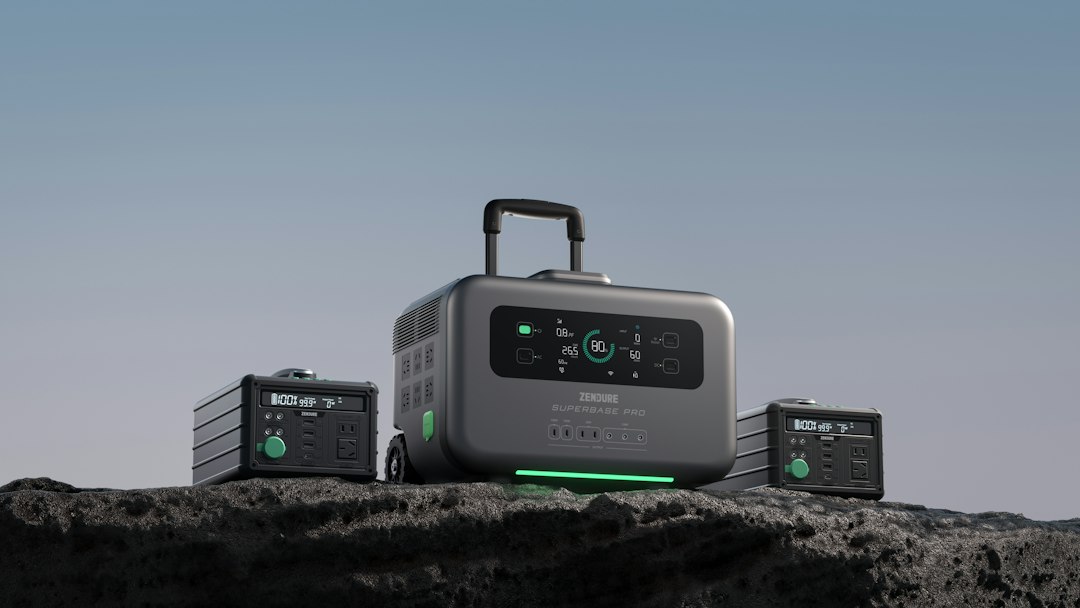
Ontario’s grid is dependable most days and forgettable on the worst ones. A February ice storm, a July thunderstorm, or a failed transformer on your street can leave a suburban block dark for anywhere between four hours and four days. Anyone who has spent a night melting snow for drinking water knows how quickly that stops being an adventure. Our ice storm outage playbook covers the household prep side, but the hardware question comes down to one thing: what actually keeps a fridge, a furnace blower, and an internet connection alive when the utility truck is still two days out. Lithium power stations have quietly moved from camping accessory to legitimate short-term backup.
A lithium power station is a battery, an inverter, and a charge controller in one box. You plug it into a wall outlet, a car, or a solar panel, and it stores DC power that the inverter converts into standard 120V AC. There is no engine, no fuel, no exhaust, and no carbon monoxide risk, which is the single biggest reason people choose one over a portable generator. The trade-off is energy density. A 20-pound propane tank paired with a 3,500W generator holds far more total energy than a 2,000Wh battery. Lithium units win on convenience, indoor safety, and noise. They lose on long outages. If you want the full category overview first, our portable power station roundup covers the smaller camping-focused units.
Sizing is where most buyers get it wrong. Manufacturers advertise capacity in watt-hours and output in watts, and those two numbers answer different questions. Watt-hours decide how long you can run something. Watts decide what you can start. A fridge that pulls 150W running needs about 1,200W for the two seconds its compressor kicks in. A furnace blower pulls 500W to 800W continuously. A submersible well pump can spike to 2,400W on startup. Add up the running watts of everything you want powered at once, then confirm the surge number covers your largest motor. The generator sizing method applies almost word for word to batteries.
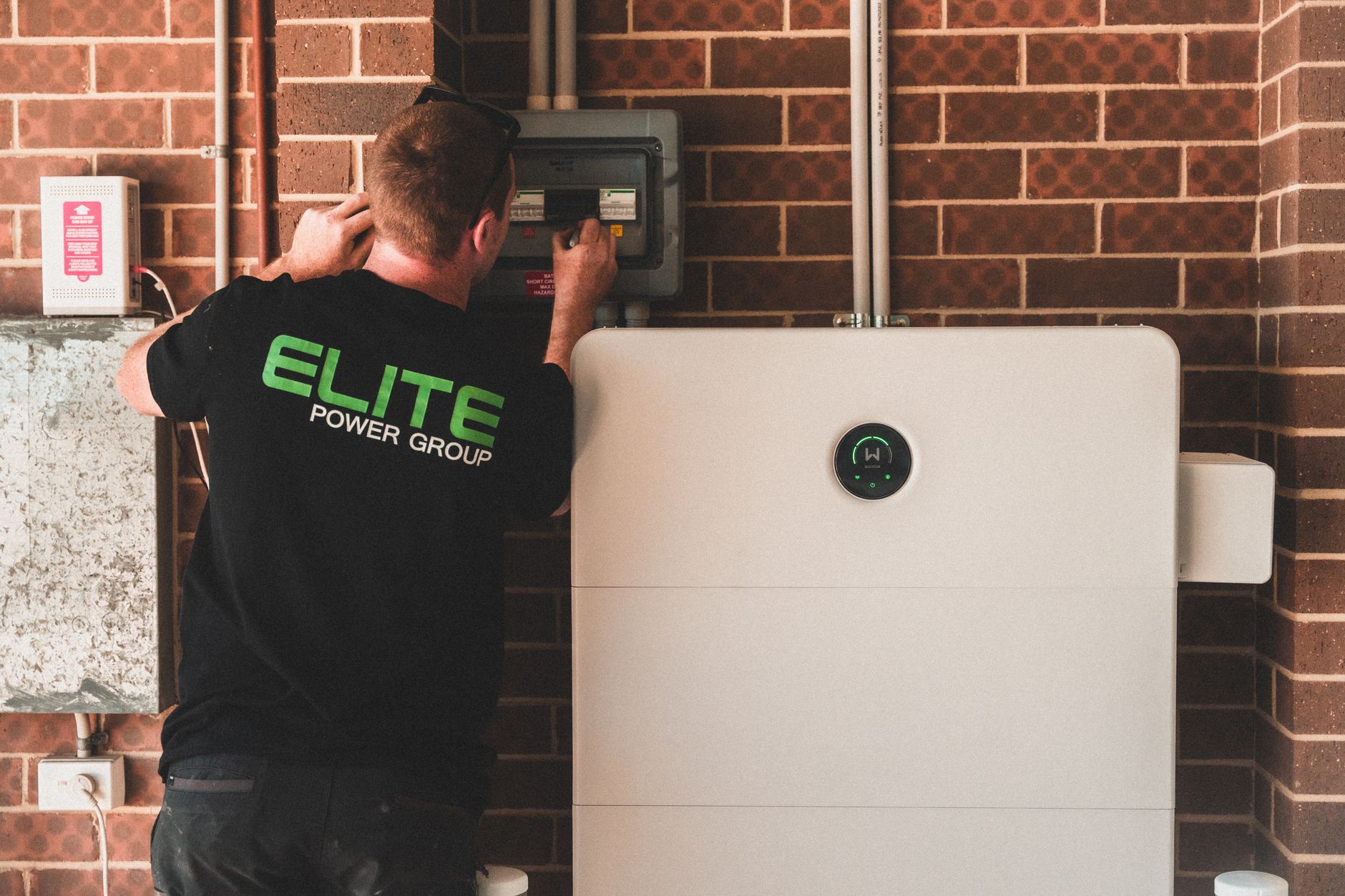
Safety rules matter here, and Ontario does not treat home backup as a hobby. The Electrical Safety Authority requires a licensed electrician and an approved transfer device if you want to feed power into your home’s wiring, whether the source is a generator, a battery, or a hybrid inverter. Backfeeding a dryer outlet is illegal in Ontario and it has killed utility workers. Battery manufacturers must meet CSA Group standards for cells and inverters, and any unit sold in Canada should carry a recognized certification mark. Everything below assumes you will either run extension cords to individual appliances or hire a licensed electrician for a proper inlet and transfer switch.
How Do the Top Options Compare?
| Product | Best For | Capacity | Continuous / Surge Output | Real-World Runtime | Check price |
|---|---|---|---|---|---|
| EcoFlow Delta Pro Ultra | Whole-home critical loads | 6,144Wh, expandable toward 90kWh | 7,200W / 10,800W | 700W sump pump for about 7.5 hours | Check price |
| Anker SOLIX F3800 | Native 240V split-phase output | 3,840Wh, expandable to 53.8kWh | 6,000W / 12,000W | 500W furnace blower for about 6.5 hours | Check price |
| Bluetti AC300 + B300 | Modular expansion | 3,072Wh per pack, up to 12,288Wh | 3,000W / 6,000W | 250W average load for about 11 hours | Check price |
| EcoFlow Delta 2 Max | Essential circuits on a tighter budget | 2,048Wh, expandable to 6,144Wh | 2,400W / 4,800W | 150W fridge for roughly 14 hours | Check price |
| Jackery Explorer 2000 Plus | Simplest first setup | 2,042Wh, expandable to 24kWh | 3,000W / 6,000W | 150W fridge for roughly 14 hours | Check price |
Specs listed are manufacturer ratings measured at roughly 25C with new cells. Usable capacity drops in cold weather and falls slowly as cells age. No prices appear in this table because they change weekly and a stale number helps nobody. Confirm a recognized certification mark (CSA, cUL, or ETL) on the unit you actually buy, and never connect a power station to household wiring without a licensed electrician and an approved transfer device.
1. EcoFlow Delta Pro Ultra , Best for Whole-Home Critical Loads
EcoFlow’s Delta Pro Ultra is the closest thing to a permanent home battery that still rolls on wheels. One unit puts out 7,200W of continuous AC power and absorbs surges up to 10,800W, which is enough to start a well pump and keep a furnace blower running on the same circuit. Base storage is 6,144Wh of lithium iron phosphate cells, and the stack expands toward 90kWh as you add batteries. At that point you are comparing it to a wall-mounted system, and our whole-house battery backup breakdown covers exactly where that line sits.
Runtime is where the numbers get real. A 6,144Wh pack driving a 700W sump pump lasts about 7.5 hours once inverter losses are counted. Swap the pump for a 150W fridge, a 60W modem and router pair, and four LED lights, and the same pack runs past 30 hours. Fan noise under a full 7,200W load measures around 45 dBA at one metre, roughly the volume of a normal conversation. At idle the unit makes no sound at all.
Recharging is the strongest argument for buying it. Plugged into a 240V circuit, it refills from empty in about two hours. Add solar and it trickles back up all day, which matters during a multi-day ice storm when every gas station in town is dark. The honest downsides are weight and price. The main unit is heavy enough that one person should not carry it down basement stairs, and expansion batteries are not cheap. Check the EcoFlow Delta Pro Ultra on Amazon if you want the full spec sheet before committing.
Key strengths:
- ✅ Runs at 7,200W continuous, enough for a well pump and a furnace blower on one circuit
- ✅ Handles 10,800W surges, so large motor startups do not trip the inverter
- ✅ Expands from 6,144Wh toward 90kWh without replacing the original hardware
- ✅ Recharges from empty in about two hours on a 240V circuit
- ✅ Acceptably quiet under full load at roughly 45 dBA, and silent at idle
- ❌ Heavy enough that moving it solo is a two-person job on stairs
- ❌ Expansion batteries push total cost well past a comparable gas generator setup
- ❌ No carbon monoxide risk, but it also stores a finite amount of energy that a fuel-burning unit can refill in minutes
Who it’s for: Ontario homeowners with a well pump, a sump pit, or a furnace they refuse to lose, who want close to whole-home coverage without a wall-mounted battery installation.
2. Anker SOLIX F3800 , Best Native 240V Output in a Portable Box
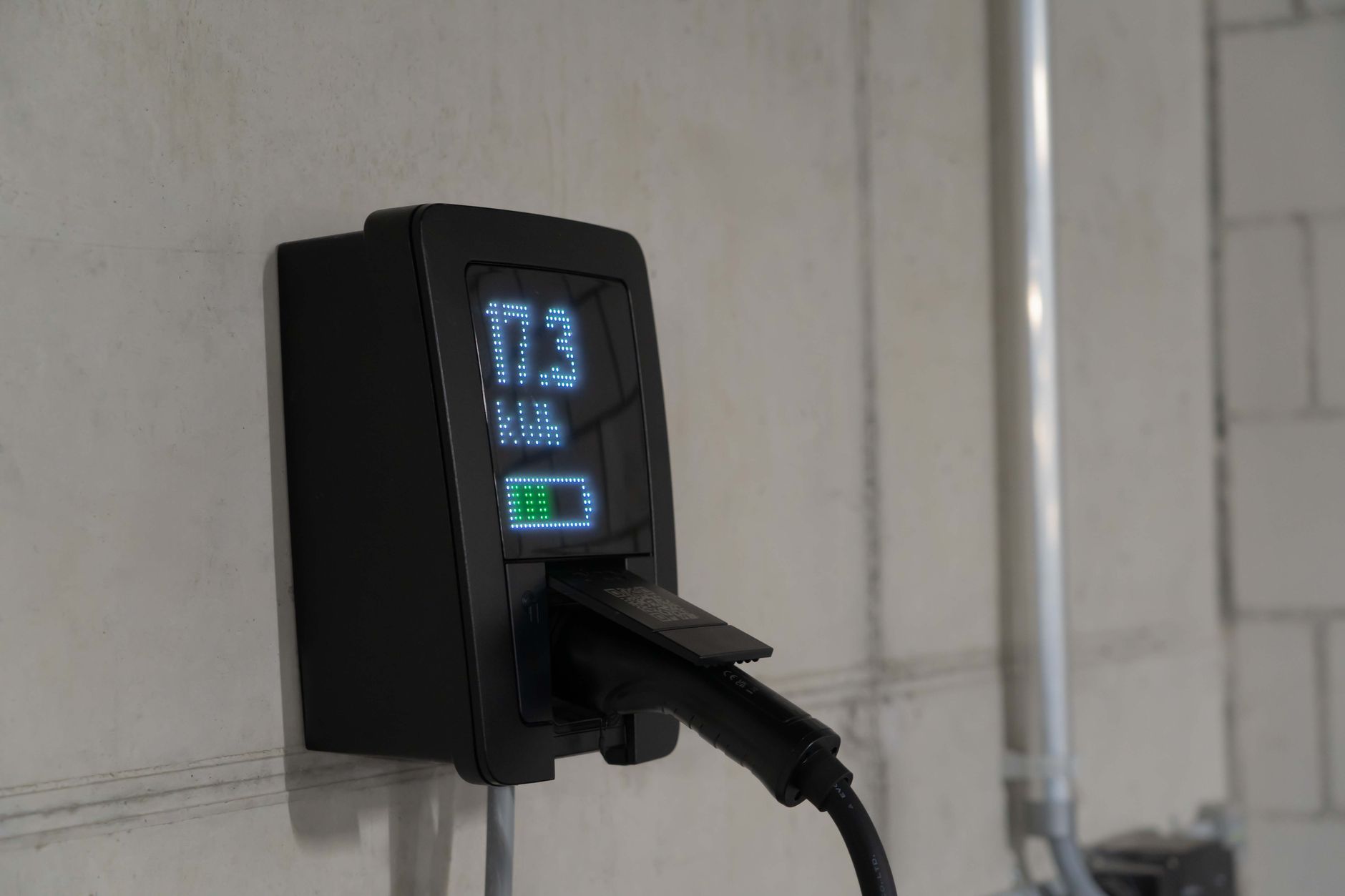
Anker’s F3800 delivers 6,000W continuous and 12,000W surge, and it is one of the few portable units with true 240V split-phase output built in. That NEMA 14-50 receptacle is the reason an electrician can wire it into a transfer switch or a critical-load panel and run 240V equipment such as a well pump or a small mini-split. Storage starts at 3,840Wh and scales to 53.8kWh with add-on batteries, which puts it in the same conversation as entry-level wall batteries.
A 3,840Wh bank runs a 500W furnace blower for roughly 6.5 hours, or a 150W fridge for about 22 hours. Duty cycles matter more than headline draw, and our refrigerator runtime guide walks through how compressor cycling changes the math. Cold weather is the other variable nobody mentions at the trade show. LFP cells lose usable capacity below freezing and most units refuse to charge below 0C, so keep the station in a heated space and run an extension cord to whatever you are powering.
Wall outlet charging takes roughly 1.5 hours at 1,800W input, and two units can be linked to double the output. The app works without being mandatory, which is rarer than it should be. Complaints center on weight and on solar panels being sold separately, which pushes the real cost of a solar-ready setup well north of the number on the box. Check the Anker SOLIX F3800 on Amazon if the 240V outlet is the feature you actually need.
Key strengths:
- ✅ True 240V split-phase outlet means no second unit required for pump or mini-split loads
- ✅ 6,000W continuous and 12,000W surge covers almost any single household motor
- ✅ Expands from 3,840Wh to 53.8kWh with plug-in battery packs
- ✅ Charges from a wall outlet in about 1.5 hours at 1,800W
- ✅ Pairing two units doubles output without a separate inverter purchase
- ❌ Solar panels are not included, so a solar-ready setup costs more than the sticker suggests
- ❌ Heavy enough that basement stairs are a two-person move
- ❌ Cold garage storage cuts usable capacity and often blocks charging entirely below freezing
Who it’s for: Homeowners who want a genuine 240V outlet for a well pump or subpanel without buying two power stations and a linking cable.
3. Bluetti AC300 + B300 , Best Modular Expandable System
The AC300 splits the inverter and the battery into separate boxes, so you buy capacity in chunks instead of all at once. Each B300 pack holds 3,072Wh of LFP storage, and a single AC300 accepts up to four of them for 12,288Wh total. Output is 3,000W continuous with 6,000W surge from one unit. Two AC300s plus Bluetti’s Fusion Box deliver 240V split-phase at 6,000W, which is enough for a submersible pump or a small subpanel feeding a few circuits.
One B300 pack running a 250W average load lasts about 11 hours. That covers an overnight outage with a furnace blower cycling, a fridge, and a home office. Add a second pack and you are into two-day territory before solar enters the picture. Anyone running a CPAP, an oxygen concentrator, or home dialysis equipment should size with a wide margin rather than a tight one, and our medical equipment backup guide explains how to calculate overnight runtime so you are not guessing at 2am.
The AC300 is not portable in any practical sense. It has no handle, weighs 47 pounds on its own, and does nothing without a battery attached. Firmware updates route through a phone app and a Wi-Fi connection, which is mildly infuriating in the middle of an outage. The 240V option costs extra and eats floor space. It is still the most flexible expandable platform in this comparison, and the only one where you can add a single 3kWh pack at a time.
Key strengths:
- ✅ Buy capacity in 3,072Wh chunks instead of replacing the whole system
- ✅ A single AC300 accepts four battery packs for 12,288Wh total
- ✅ Two units with the Fusion Box deliver 240V split-phase at 6,000W
- ✅ 3,000W continuous output with a 6,000W surge rating handles most household motors
- ✅ Long-term cost per added kilowatt-hour is lower than most sealed competitors
- ❌ No handle and 47 pounds of inverter alone, so it stays where you put it
- ❌ Requires a battery pack to function at all, which raises the entry cost
- ❌ Firmware and settings updates depend on a phone app and a live Wi-Fi connection
Who it’s for: Buyers who want to start small with one 3kWh pack and add storage year after year, especially anyone running medical equipment overnight.
4. EcoFlow Delta 2 Max , Best Mid-Size Unit for Essential Circuits
The Delta 2 Max is the sensible middle of the market. It puts out 2,400W continuous and 4,800W surge, with an X-Boost mode that pushes resistive loads like a kettle or a small space heater toward 3,400W. Storage is 2,048Wh of LFP cells, expandable to 6,144Wh with two extra batteries. It weighs around 50 pounds, which is heavy but manageable for one adult carrying it up from the basement.
Realistically it runs a 150W fridge for roughly 14 hours, or a laptop, router, and 20W of LED lighting for about 25 hours. It will not start a well pump and it has no 240V output, so anyone with a submersible pump needs a bigger unit. For a condo, an apartment, or a house on municipal water, it covers the essentials without demanding a dedicated circuit or an electrician’s visit.
Recharge to 80 percent takes under an hour from a wall outlet, and the solar input accepts up to 1,000W of panels. X-Boost is a convenience feature, not a specification, and it will not start a motor above the surge rating no matter what the marketing says. Buy it if you want a quiet unit for the fridge, the internet, and the phones. Skip it if your house has a pump or a 240V appliance that actually matters during an outage.
Key strengths:
- ✅ 2,400W continuous and 4,800W surge covers fridge, internet, lights, and small electronics
- ✅ 2,048Wh base capacity expands to 6,144Wh with add-on batteries
- ✅ Recharges to 80 percent in under an hour from a standard wall outlet
- ✅ About 50 pounds, light enough for one person to position without help
- ✅ Accepts up to 1,000W of solar for multi-day outages
- ❌ No 240V output, so a submersible well pump is out of the question
- ❌ 2,400W continuous will not carry a large furnace plus a sump pump at once
- ❌ X-Boost marketing oversells what the inverter can actually start
Who it’s for: Apartment and condo dwellers, or homeowners on city water who want fridge, internet, and lighting covered without a panel modification.
5. Jackery Explorer 2000 Plus , Best Simple First Setup
Jackery’s Explorer 2000 Plus is the easiest unit here to hand to someone who has never owned a battery. Output is 3,000W continuous and 6,000W surge, storage is 2,042Wh of LFP cells, and the system expands to 24kWh with five add-on packs. Two units plus a connector cable give you 240V split-phase output. At 61 pounds it is lighter than most competitors in the same output class, and the controls are physical buttons rather than a phone screen.
Runtime figures land close to the Delta 2 Max. A 150W fridge runs about 14 hours, a 1,000W microwave runs roughly 1.5 hours, and a 60W laptop with a few LED lights runs close to a full day. Solar input accepts roughly 1,400W of panels, which is plenty to refill the pack on a clear spring day and nowhere near enough during a January snow squall. Ontario winters are the hardest test for any solar-charged battery.
The straightforward controls are the selling point. No app pairing, no firmware drama, no account creation. Expansion packs cost more per kilowatt-hour than the modular competition, and the 240V option needs a second unit plus a cable. If you want a first backup battery that a neighbour can operate during a blackout without a tutorial, this is the one. Check the Jackery Explorer 2000 Plus on Amazon to compare current bundle options.
Key strengths:
- ✅ 3,000W continuous and 6,000W surge in a 61-pound package
- ✅ Physical controls and no mandatory app make it easy for anyone to operate
- ✅ LFP cells rated for thousands of charge cycles
- ✅ Expands to 24kWh across five battery packs
- ✅ Accepts roughly 1,400W of solar input
- ❌ Expansion packs cost more per kilowatt-hour than modular competitors
- ❌ 240V output requires two units and a linking cable
- ❌ Solar panels are a separate purchase and roughly 1,400W is the ceiling
Who it’s for: First-time buyers who want a reputable, simple battery backup that any household member can run without reading a manual.
Frequently Asked Questions
How long will a lithium power station run a refrigerator?
A modern fridge draws about 150W while the compressor runs but cycles on and off, so the average is closer to 70W. A 2,000Wh station keeps it cold for roughly 12 to 20 hours, while a 6,000Wh system stretches past two days. Keep the door shut and add solar to extend it further.
Can a lithium power station run a furnace or well pump?
A furnace blower usually draws 500W to 800W and runs fine on most 2,000Wh-and-up stations. A submersible well pump is harder because startup surge hits 2,000W to 2,400W or more, so you need a high-surge unit with 240V output or a soft-start kit installed by a licensed electrician.
Do I need an electrician to connect a power station to my house?
Yes, if you want it feeding household wiring. The Electrical Safety Authority requires an approved transfer device and a licensed electrician for any inlet that ties a backup source into your panel. Plugging individual appliances into the station’s own outlets does not require a permit.
Are lithium power stations safe to keep indoors?
Yes. LFP cells produce no carbon monoxide and have a much lower thermal runaway risk than older lithium chemistries. Keep the unit dry and never run a gasoline generator indoors, in an attached garage, or near a window intake.
What size lithium power station do I need for a week-long outage?
No portable station covers seven days of full household load on one charge. You buy enough battery for overnight essentials and recharge daily from solar or a small generator. A 6,000Wh bank plus roughly 800W of solar is a workable Ontario setup for fridge, lights, internet, and a furnace blower, though January production is poor.
Do lithium power stations work in Canadian winter cold?
They work but lose capacity. LFP cells deliver noticeably less usable energy below freezing and most manufacturers block charging below 0C to protect the cells. Store the unit indoors, run an extension cord to the load, and expect 10 to 20 percent less runtime at minus 15C.
What Should You Remember?
- Match surge, not just running watts. The startup draw of a well pump or furnace blower is what decides whether the unit trips offline.
- Capacity sets runtime. Every 1,000Wh of usable battery buys roughly 10 hours of a 100W average load once inverter losses are counted.
- LFP chemistry is the safe default. Lithium iron phosphate cells tolerate heat, last thousands of cycles, and avoid the thermal runaway profile of older NMC packs.
- 240V output is the dividing line. If you own a well pump, a mini-split, or want a transfer-switch install, buy a unit with native split-phase output.
- Cold weather cuts real capacity. Store the battery above freezing and expect 10 to 20 percent less runtime outdoors at minus 15C.
- Permits apply to house wiring. ESA rules require a licensed electrician and an approved transfer device for any connection to your panel.
- Solar turns a two-day battery into a two-week battery. A 400W to 800W array will not run your house, but it can refill a station day after day.
This article is for general information only. Always follow manufacturer instructions, local electrical codes, and hire a licensed electrician for transfer switches and standby generator installation. Carbon monoxide is deadly , never run a generator indoors.