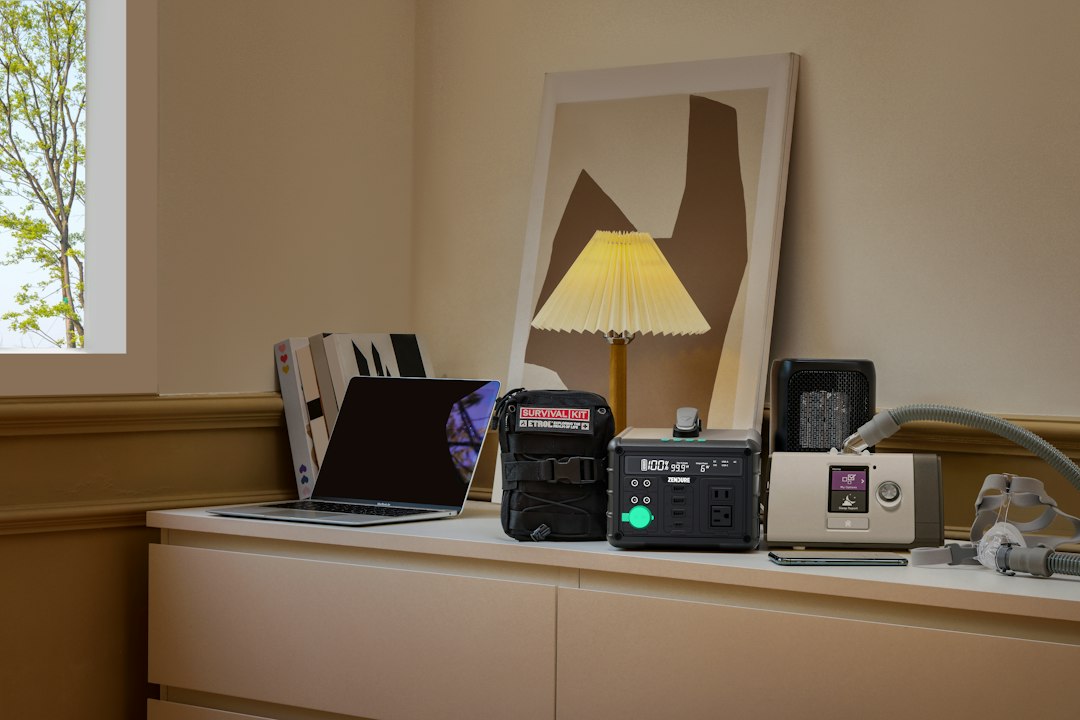
Ontario’s grid is reliable most days, but ice storms, freezing rain, and summer heat waves still knock out power for hours or days. In 2023, an ice storm left more than 100,000 homes in eastern Ontario without electricity. A small 300 watt power station will not run your furnace, but it will keep phones charged, the internet running, and a few lights on. For a deeper look at outage patterns, see our emergency power statistics for 2026. Prepare for winter with a full checklist that covers heat, food, and communications.
A 300W station sits in a narrow band. It is bigger than a phone bank and smaller than a 1,000W unit that can run a fridge or sump pump. That makes it ideal for apartments, condos, small cottages, and as a second layer of backup for a home office. It will run a 60W fridge for about 4 hours on a 250Wh battery, or a 10W router for 25 hours. If you rely on medical equipment, check our emergency power for medical equipment guide before you buy. The right station depends on your actual loads, not on marketing claims.
Safety and code matter even for small stations. The Electrical Safety Authority regulates electrical work in Ontario, and any permanent backup wiring needs a licensed electrician and a permit. A plug-in 300W station does not need a permit, but it should carry a certification mark from a recognized testing lab. The CSA Group publishes the standards for electrical safety and carbon monoxide alarms. For more on safe generator and battery use, see our generator safety tips. These rules exist because backup power can be dangerous when it is done wrong.
We picked six 300W stations that are available in Canada and meet three baseline rules. First, they must have a true 300W continuous inverter and a 600W surge rating. Second, they must use lithium iron phosphate cells for longer life and better cold-weather performance. Third, they must come from a brand with Canadian warranty support. We also weighed charge time, outlet count, and noise. For a broader look at larger options, see our best portable power station picks for 2026. And if you are sizing a whole-home system, start with our generator sizing guide.
How Do the Top Options Compare?
| Model | Best For | Running Watts | Surge Watts | Capacity (Wh) | Check Price |
|---|---|---|---|---|---|
| EcoFlow River 3 | Best overall | 300W | 600W | 245Wh | Check price |
| Jackery Explorer 300 Plus | Best for camping | 300W | 600W | 288Wh | Check price |
| Anker Solix C300 | Best fast charging | 300W | 600W | 288Wh | Check price |
| Bluetti AC2A | Best budget | 300W | 600W | 204Wh | Check price |
| Goal Zero Yeti 300 | Best app | 300W | 600W | 297Wh | Check price |
| Westinghouse iGen300s | Best for cottages | 300W | 600W | 296Wh | Check price |
Prices change often and are not listed here. Always check the current price and confirm the unit is in stock before buying. Watt-hour capacity is the best predictor of runtime. Surge watts matter for motors and compressors. None of these stations can power a furnace, sump pump, or central air conditioner.
1. EcoFlow River 3 , Best overall for Ontario homes
EcoFlow’s River 3 is the most complete 300W station for the money. It delivers 300W continuous and 600W surge through a pure sine wave inverter. The 245Wh LiFePO4 battery charges from 0 to 100 percent in about 50 minutes on AC. That speed matters when you know a storm is coming. The unit also has a 10ms UPS mode, so it can keep a desktop computer or modem alive during a brief outage. EcoFlow lists the battery at 3,000 cycles to 80 percent capacity. For more options, see our best portable power station picks for 2026.
Runtime is where expectations need tempering. A 245Wh battery runs a 10W router for roughly 20 hours, a 60W fridge for about 3.5 hours, and a 300W load for under an hour. The X-Boost feature can run some 600W resistive devices, but it will drain the battery fast. You get four AC outlets, two USB-C ports, one USB-A, and a 12V car port. The app shows input, output, and remaining time. It also supports a 220W solar input, which is more than most competitors at this size. Check the EcoFlow River 3 on Amazon.
Build quality is solid but not rugged. The plastic case has a handle and weighs 7.9 pounds. It is not waterproof, so keep it inside or under cover. The fan is quiet under 200W and audible above that. For Ontario winters, LiFePO4 handles cold better than lead acid, but you still should not charge below freezing. The River 3 is a strong first station for a condo, apartment, or home office.
Key strengths:
- ✅ Delivers a true 300W continuous and 600W surge from a pure sine wave inverter.
- ✅ Charges to 100 percent in under 50 minutes on AC, which is best in class.
- ✅ Uses LiFePO4 cells rated for 3,000 cycles, so it lasts years longer than older lithium-ion packs.
- ✅ Includes a 10ms UPS mode that protects computers and network gear.
- ✅ Supports up to 220W solar input for off-grid recharging.
- ❌ 245Wh capacity is small for a 300W station. Fridge runtime is only about 3.5 hours.
- ❌ No expansion battery option, so you cannot add capacity later.
- ❌ The case is not water resistant, so it cannot live on a wet dock or open porch.
Who it’s for: Choose the River 3 if you want the fastest charging, a UPS mode for electronics, and the best overall balance of features for a small Ontario home.
2. Jackery Explorer 300 Plus , Best for camping and cottage backup
Jackery’s Explorer 300 Plus is the lightest station in this group at 7.7 pounds. It offers 300W continuous and 600W surge, with a 288Wh LiFePO4 battery. That extra 43Wh over the River 3 gives you about 15 more minutes at a 300W load, or roughly 4.8 hours at 60W. The unit has two AC outlets, one USB-C 100W, one USB-A, and a 12V car port. It charges in about 2 hours on AC, which is slower than the EcoFlow but still reasonable. Jackery includes a 3-year warranty and Canadian support.
Runtime is predictable. A 10W router runs for about 28 hours. A 60W fridge runs for about 4.8 hours. A 300W load runs for just under an hour. The Explorer 300 Plus does not have a UPS mode, so it will not protect a desktop during a flicker. It does support 100W solar input, and the MPPT controller squeezes out decent performance on cloudy days. For a deep dive on fridge runtime, see our how long a power station runs a refrigerator guide.
Build quality is excellent. The case feels dense and the handle is comfortable. The LCD screen is clear and shows input, output, and battery percentage. The fan is quiet. The main downside is price per watt-hour. You pay for the Jackery name, the light weight, and the strong warranty. If you want a station that lives in a cottage cupboard and comes out for storms, this is a solid pick.
Key strengths:
- ✅ Weighs only 7.7 pounds, making it easy to carry between rooms or to a cottage.
- ✅ 288Wh LiFePO4 battery gives slightly longer runtime than most 300W rivals.
- ✅ Two AC outlets, 100W USB-C, and a 12V car port cover most small devices.
- ✅ Backed by a 3-year warranty with Canadian service.
- ✅ Quiet fan and clear LCD screen for real-time monitoring.
- ❌ No UPS mode, so it cannot protect a desktop or modem during a brief outage.
- ❌ AC charging takes about 2 hours, which is slower than the EcoFlow River 3.
- ❌ Costs more per watt-hour than budget brands like Bluetti.
Who it’s for: Pick the Explorer 300 Plus if you want the lightest 300W station for cottage weekends and do not need UPS protection.
3. Anker Solix C300 , Best for fast charging and solar input
Anker’s Solix C300 matches the 300W continuous and 600W surge specs of the others, but it stands out with a 300W AC input. That means it charges from 0 to 100 percent in about 1 hour. It also accepts up to 300W of solar, which is the highest in this group. The 288Wh LiFePO4 battery is rated for 3,000 cycles. You get three AC outlets, two USB-C ports (one 100W, one 30W), and a 12V car port. The C300 is slightly heavier than the Jackery at 8.6 pounds.
Runtime follows the same math as other 288Wh stations. A 60W fridge runs for about 4.8 hours. A 10W router runs for about 28 hours. A 300W load runs for just under an hour. The C300 does not have a UPS mode, but it does have a fast-switching inverter that some users report works for brief gaps. Anker does not advertise it as a UPS, so do not rely on it for that. The 300W solar input is a genuine advantage for off-grid cabins or long outages.
Build quality is good. The case has a sturdy handle and a clear display. The fan is quiet under 200W. The app is simple and connects over Bluetooth and Wi-Fi. Anker’s Canadian warranty is 5 years, which beats Jackery and EcoFlow. The main trade-off is price. The C300 often costs more than the River 3. If you value charge speed and solar headroom, it is worth the premium. Check the Anker Solix C300 on Amazon.
Key strengths:
- ✅ Charges to 100 percent in about 1 hour on AC with a 300W input.
- ✅ Accepts up to 300W of solar, the highest in this 300W class.
- ✅ 288Wh LiFePO4 battery with a 5-year warranty, the longest here.
- ✅ Three AC outlets and two USB-C ports cover more devices at once.
- ✅ Quiet fan and a clear display for monitoring.
- ❌ No true UPS mode, so it will not protect a desktop during a flicker.
- ❌ Heavier than the Jackery Explorer 300 Plus at 8.6 pounds.
- ❌ Often costs more than the EcoFlow River 3 with similar capacity.
Who it’s for: Choose the Solix C300 if fast charging and high solar input matter more to you than UPS protection or the lowest price.
4. Bluetti AC2A , Best budget 300W station
The Bluetti AC2A is the value pick. It delivers 300W continuous and 600W surge, with a 204Wh LiFePO4 battery. That is less capacity than the others, but it costs significantly less. It charges in about 1 hour on AC with a 200W input, and it accepts up to 200W of solar. You get two AC outlets, one USB-C 100W, one USB-A, and a 12V car port. The AC2A weighs 7.9 pounds and has a built-in handle.
Runtime is shorter because of the smaller battery. A 60W fridge runs for about 3.4 hours. A 10W router runs for about 20 hours. A 300W load runs for about 40 minutes. The AC2A does not have a UPS mode. It does have a clear LCD screen and a simple app. The fan is quiet under 150W and audible above that. For a budget station, the build quality is surprisingly good. The plastic case feels solid, and the ports are well spaced.
The main compromise is capacity. If you need to run a fridge overnight, the AC2A will not do it. But for charging phones, running a router, and powering a few LED lights during a short outage, it is enough. Bluetti offers a 2-year warranty, which is shorter than Anker and Jackery. If you want the lowest entry price for a 300W station with LiFePO4, this is the one.
Key strengths:
- ✅ Lowest price of any 300W station with LiFePO4 chemistry.
- ✅ Charges in about 1 hour on AC with a 200W input.
- ✅ Accepts up to 200W of solar for off-grid recharging.
- ✅ Weighs 7.9 pounds with a built-in handle.
- ✅ Clear LCD screen and simple app.
- ❌ Only 204Wh capacity, so runtime is about 30 percent shorter than 288Wh rivals.
- ❌ No UPS mode for electronics protection.
- ❌ 2-year warranty is shorter than Anker’s 5-year coverage.
Who it’s for: Pick the AC2A if you want a capable 300W station for short outages and want to spend as little as possible.
5. Goal Zero Yeti 300 , Best app and solar integration
Goal Zero’s Yeti 300 is the most polished station in this group. It offers 300W continuous and 600W surge, with a 297Wh LiFePO4 battery. That is the largest capacity here. It charges in about 2.5 hours on AC with a 120W input, which is slow. Solar input maxes out at 200W. You get two AC outlets, one USB-C 60W, two USB-A, and a 12V car port. The Yeti 300 weighs 9.5 pounds, making it the heaviest.
Runtime is the best of the 300W class. A 60W fridge runs for about 5 hours. A 10W router runs for about 30 hours. A 300W load runs for just under an hour. The Yeti 300 does not have a UPS mode. The Goal Zero app is excellent, with clear graphs and remote control over Wi-Fi. The build quality is tank-like. The case feels like it could survive a drop off a tailgate. The display is bright and easy to read.
The downsides are price and charge speed. The Yeti 300 costs more than every other station here, and it charges slower than all of them. Goal Zero targets the outdoor and overland market, and the pricing reflects that. If you already own Goal Zero solar panels, the integration is simple. Otherwise, you can get similar capacity for less. The 2-year warranty is also shorter than Anker’s.
Key strengths:
- ✅ Largest capacity in this group at 297Wh, giving the longest runtime.
- ✅ Excellent app with remote control and detailed power graphs.
- ✅ Tank-like build quality that handles rough handling.
- ✅ Integrates with Goal Zero solar panels and accessories.
- ✅ Clear, bright display that is easy to read outdoors.
- ❌ Slow AC charging takes about 2.5 hours.
- ❌ Most expensive station in this comparison.
- ❌ Heaviest at 9.5 pounds, so it is less portable than rivals.
Who it’s for: Choose the Yeti 300 if you want the longest runtime, the best app, and you already own Goal Zero gear.
6. Westinghouse iGen300s , Best for Ontario cottages and remote cabins
Westinghouse’s iGen300s is a quiet, practical 300W station. It delivers 300W continuous and 600W surge, with a 296Wh LiFePO4 battery. It charges in about 2 hours on AC with a 150W input. Solar input maxes out at 200W. You get two AC outlets, one USB-C 100W, two USB-A, and a 12V car port. The unit weighs 8.8 pounds. Westinghouse includes a 3-year warranty and a solid Canadian service network.
Runtime is nearly identical to the Goal Zero Yeti 300. A 60W fridge runs for about 5 hours. A 10W router runs for about 30 hours. A 300W load runs for just under an hour. The iGen300s does not have a UPS mode. The display is simple but readable. The fan is quiet. The case is not waterproof, so it needs to stay indoors or under cover. For cottage use, that is usually fine.
The main advantage is price and availability. The iGen300s often sells for less than the Jackery and Anker, and it is stocked at Canadian Tire and other Ontario retailers. That means you can buy it locally and return it locally if something goes wrong. The app is basic but works. If you want a no-fuss 300W station for a cottage or cabin, this is a strong choice.
Key strengths:
- ✅ 296Wh capacity gives nearly the same runtime as the larger Goal Zero Yeti 300.
- ✅ Often sells for less than comparable Jackery and Anker models.
- ✅ Available at Canadian Tire and other Ontario retailers for easy local returns.
- ✅ 3-year warranty with a solid Canadian service network.
- ✅ Quiet fan and simple, readable display.
- ❌ No UPS mode for protecting electronics.
- ❌ AC charging takes about 2 hours, which is slower than EcoFlow and Anker.
- ❌ App is basic compared to Goal Zero and Anker.
Who it’s for: Pick the iGen300s if you want a reliable 300W station that you can buy and service locally in Ontario.
Frequently Asked Questions
What can a 300W power station run in an Ontario home?
A 300W power station runs phones, laptops, Wi-Fi routers, LED lights, a TV, and a small refrigerator or freezer for a few hours. It will not run a furnace, sump pump, space heater, or central air conditioner.
How long will a 300W power station run a fridge?
A typical 300W station with 250Wh to 300Wh capacity runs a 60W to 100W fridge for 2 to 4 hours. Runtime drops if the fridge cycles on frequently or the ambient temperature is high.
Do I need a licensed electrician to use a 300W power station?
No. A 300W power station plugs into a standard wall outlet or extension cord, so it does not require a transfer switch or electrical panel work. For whole-home backup, the Electrical Safety Authority requires a licensed electrician.
Can a 300W power station run a sump pump?
Most sump pumps draw 800W to 1,500W at startup, so a 300W station cannot run one. You need a larger generator or battery system for sump pump backup.
Are 300W power stations safe to use indoors?
Yes. These stations produce no carbon monoxide, so they are safe indoors. Keep them dry, well ventilated, and away from direct sunlight. Never use a gas generator indoors.
What size power station do I need for a furnace?
A natural gas or propane furnace blower typically draws 400W to 800W running watts. You need a 1,000W to 2,000W power station or a small generator for furnace backup.
What Should You Remember?
- Start with surge watts. A 300W station with 600W surge handles small motors and fridge compressors.
- Check capacity in watt-hours. 250Wh to 300Wh gives you 2 to 5 hours for low-draw essentials.
- Choose lithium iron phosphate. LiFePO4 lasts 3,000 cycles and handles Ontario cold better than lead acid.
- Verify certification. Look for CSA, ETL, or UL marks. The Electrical Safety Authority expects certified equipment.
- Skip the furnace and sump pump. A 300W station cannot run these. Plan a larger system for those loads.
- Use a UPS mode for electronics. Some 300W stations switch over in 10ms to 20ms, protecting computers and modems.
This article is for general information only. Always follow manufacturer instructions, local electrical codes, and hire a licensed electrician for transfer switches and standby generator installation. Carbon monoxide is deadly , never run a generator indoors.