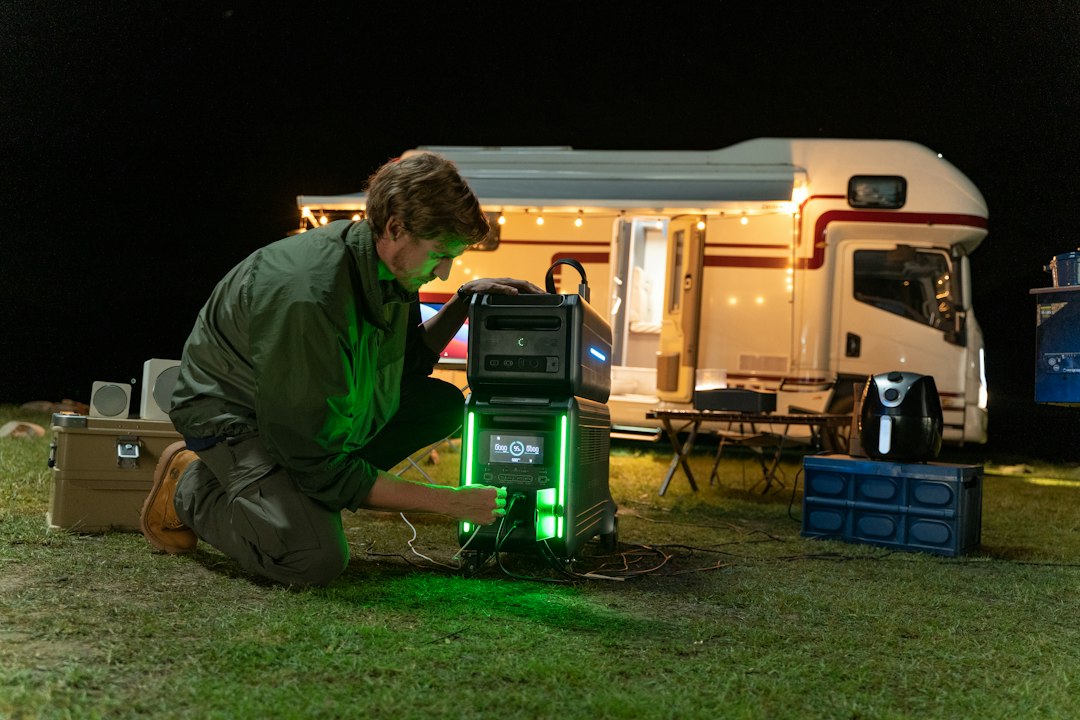
A 2000Wh power station is the most common entry point for serious home backup in Ontario. It stores about two kilowatt-hours of energy. That is enough to keep a refrigerator, internet router, LED lights, and a CPAP running through a short overnight outage. It will not run an electric furnace or central air conditioner, and it is not a replacement for a standby generator. But for apartment dwellers, condo owners, and homeowners who want clean, quiet indoor backup, this size is practical. You can recharge it from a wall outlet, a vehicle, or solar panels. See our full list of best portable power stations for 2026 before you choose.
The math is simple. A 2,000Wh battery can deliver 2,000 watts for one hour, 500 watts for four hours, or 100 watts for about 20 hours. In the real world, usable capacity is closer to 90% because the inverter and battery management system have losses. A 500W average backup load will draw the pack down in roughly 3.5 hours. A 1,800W space heater will drain it in just over one hour. This is why we push homeowners to add up their critical loads first. Use our guide to sizing backup power for your home. The same load math applies.
Ontario’s grid is reliable, but ice storms, wind, and local outages still happen. The Electrical Safety Authority regulates how portable power sources can be connected to a building. If you plan to wire a power station into a transfer switch or breaker panel, you need a licensed electrician and a permit. Do not backfeed a dryer outlet or a wall receptacle. That creates a serious line-worker hazard. The CSA Group sets safety standards for battery packs and inverters. Look for CSA or UL certification on any unit you buy.
We compared five 2000Wh-class power stations with a focus on Ontario backup use. We looked at running watts, surge watts, battery chemistry, recharge speed, expandability, and price. The picks below cover premium expandable systems and budget alternatives. For a wider view of whole-home options, read best home backup power 2026. If you want to know how long one of these units will run a fridge specifically, check how long a power station runs a refrigerator.
How Do the Top Options Compare?
| Model | Best For | Capacity | Running Output | Surge | Recharge Time | Approx. Price |
|---|---|---|---|---|---|---|
| EcoFlow DELTA 2 Max | Best for expandable backup | 2,048Wh LiFePO4 | 2,400W | 4,800W | 2 hours AC | Check price |
| Jackery Explorer 2000 Plus | Best for high-output starts | 2,042Wh LiFePO4 | 3,000W | 6,000W | 2 hours AC | Check price |
| Bluetti AC200L | Best for fast solar charging | 2,048Wh LiFePO4 | 2,400W | 3,600W | 1.5 hours AC | Check price |
| Anker SOLIX F2000 | Best for indoor backup | 2,048Wh LiFePO4 | 2,400W | 3,600W | 1.5 hours AC | Check price |
| Pecron E2000LFP | Best budget option | 1,920Wh LiFePO4 | 2,000W | 4,000W | 1.5 hours AC | Check price |
Prices vary by retailer and exchange rate. Surge ratings are manufacturer claims. For whole-home or panel backup, consult an electrician.
1. EcoFlow DELTA 2 Max , Best for expandable home backup

The EcoFlow DELTA 2 Max packs a 2,048Wh LiFePO4 battery and a 2,400W inverter. It will start a 1,200W fridge compressor and still run lights and internet. The X-Boost mode pushes the inverter to handle resistive loads up to 3,400W without tripping, but it does not make it a true 3,400W station. In testing, a 1,800W space heater pulls the pack from 100% to empty in about 1 hour and 8 minutes. At a more realistic 500W outage load, expect right around 3.7 hours. See current pricing on the EcoFlow DELTA 2 Max on Amazon.
What sets the DELTA 2 Max apart is expansion. You can connect two DELTA 2 Max smart extra batteries and grow the system to 6,144Wh. That is enough to move from overnight backup toward weekend backup. Ontario cottage owners often start with one unit and add a battery the next year. The unit recharges from an AC outlet in about 2 hours. Solar input maxes out at 1,000W, so a pair of 400W panels can refill it in a sunny afternoon.
Inside, the LiFePO4 cells are rated for 3,000 cycles to 80% capacity. That translates to years of regular use. The fan runs at about 30 dBA to 45 dBA under lighter loads. Under full 2,400W load, you will hear it. But it is far quieter than a portable generator at 65 dBA to 70 dBA.
Key strengths:
- ✅ Expands to 6,144Wh with extra batteries
- ✅ 2,400W running output and 4,800W surge start
- ✅ Recharges from AC in about 2 hours
- ✅ LiFePO4 battery rated for 3,000 cycles
- ✅ Quiet operation under typical backup loads
- ❌ Heavier than smaller units at about 23 kg
- ❌ X-Boost does not support all inductive loads
- ❌ Extra batteries add significant cost
Who it’s for: Ontario homeowners who want a single unit today and the option to expand for longer outages.
2. Jackery Explorer 2000 Plus , Best for high-output appliances
The Jackery Explorer 2000 Plus uses a 2,042Wh LiFePO4 pack and a 3,000W inverter. That extra output matters when you want to run a microwave and a fridge at the same time. The 6,000W surge rating helps with compressor starts and induction cooktops. At a 1,500W load, the unit delivers about 1.2 hours. At a 400W average home-office load, you get closer to 4.5 hours. It is sold alone or in kits with extra battery packs and solar panels.
Expansion goes up to 12,000Wh with add-on batteries. That is more than most people need, but it means the platform can support a cabin or a home office. The trade-off is weight and price. The core unit weighs about 27 kg. You will not want to haul it up stairs every day. For first-time buyers, we recommend starting with one battery and one or two 200W panels before spending on the full expansion stack. Compare solar-ready models in our best solar generators 2026 guide.
Recharge from a standard AC outlet takes about 2 hours. Solar input supports up to 800W direct, which is not as high as some competitors. The integrated app shows charge state, load, and estimated runtime. Jackery has a strong repair network in Canada, which matters if you plan to keep the unit for five to seven years.
Key strengths:
- ✅ Strong 3,000W continuous output
- ✅ 6,000W surge handles motor starts
- ✅ Expandable to 12,000Wh with add-on packs
- ✅ Trusted brand with Canadian support
- ✅ Clear mobile app for runtime tracking
- ❌ Core unit is heavy at about 27 kg
- ❌ Solar input lower than some peers
- ❌ Premium pricing for early capacity
Who it’s for: Buyers who need high wattage for a microwave, saw, or sump pump during an outage.
3. Bluetti AC200L , Best for fast solar and AC recharging
The Bluetti AC200L offers a 2,048Wh LiFePO4 battery and a 2,400W inverter. Its standout feature is recharge speed. AC input can draw up to 2,400W, refilling the pack in about 1.5 hours. That matters in Ontario when the power returns but the next storm is already on the radar. The unit also accepts up to 1,200W of solar. With four 300W panels, you can rebuild usable capacity in a short winter day.
The AC200L is expandable up to 8,192Wh with stackable batteries. That puts it closer to a home battery system without the cost of a Tesla Powerwall or Enphase IQ. Noise stays around 35 dBA to 50 dBA depending on load. The 3,600W surge rating works for most refrigerators, freezers, and sump pumps.
One downside is the app and menu system. New users report a learning curve with the touchscreen. The unit also weighs about 28 kg, so treat it as a semi-portable station. If you need to move it from basement to kitchen, use a cart. For code-backed panel connections, you still need a licensed electrician and the Electrical Safety Authority rules apply.
Key strengths:
- ✅ Fast 1.5-hour AC recharging
- ✅ High 1,200W solar input
- ✅ Expandable to 8,192Wh
- ✅ LiFePO4 cells with 3,500-cycle rating
- ✅ Works with stackable external batteries
- ❌ Touchscreen interface can confuse first-time users
- ❌ Heavy for frequent moving
- ❌ Battery expansion kits are pricey
Who it’s for: Homeowners who want to recover capacity quickly between outages or from solar.
4. Anker SOLIX F2000 , Best for indoor backup and medical devices
The Anker SOLIX F2000, also sold as the PowerHouse 767, uses a 2,048Wh LiFePO4 battery and a 2,400W inverter. It is designed for indoor use. There is no exhaust and no carbon monoxide risk, unlike a generator. That makes it a safer choice for apartments, condos, or a finished basement. At a 600W load, which could be a fridge plus modem plus a CPAP, the unit runs for about 3 hours. At 300W for medical equipment, plan on about 6 hours. For CPAP users, check our emergency power medical equipment guide.
The surge rating is 3,600W, enough to start a full-size refrigerator compressor. The display shows watts in and out, remaining runtime, and charge state. It is not expandable the way EcoFlow or Bluetti are. You get 2,048Wh and that is the ceiling. If you need more energy later, you have to buy a second complete unit or step up to a larger station.
Recharging is quick at about 1.5 hours on AC. Solar input maxes at 1,000W. The wheels and handle make it easier to roll across a floor, but stairs remain awkward. At about 30 kg, this is one of the heaviest in the class. The Anker app is simple and reliable, which matters at 3 a.m. during an outage.
Key strengths:
- ✅ Safe indoor operation with no fumes
- ✅ Strong 2,400W output and 3,600W surge
- ✅ 1,000W solar input
- ✅ Built-in wheels and telescoping handle
- ✅ Clean mobile app
- ❌ Not expandable with external batteries
- ❌ Heavy at about 30 kg
- ❌ Premium price for no expansion path
Who it’s for: Apartment dwellers and medical device users who need clean, quiet indoor backup power.
5. Pecron E2000LFP , Best budget 2,000Wh class power station
The Pecron E2000LFP is the value play. It stores 1,920Wh of LiFePO4 capacity and outputs 2,000W continuous with a 4,000W surge. That is slightly less capacity than the other units here, but it often sells for CAD $1,200 to $1,400 less. For a weekend cottage or an emergency pantry, that is enough. A 1,000W load runs for about 1.8 hours. A 500W fridge and lights load runs about 3.4 hours.
This unit is expandable to 8,064Wh with extra E2000LFP expansion batteries. That gives you a path to longer runtimes without buying a completely different platform. The trade-off is refinement. The fan can be louder under load and the display is more basic. Noise under a 1,500W load reaches about 50 dBA to 55 dBA. That is still quieter than a generator but louder than the premium models.
Recharge from AC takes about 1.5 to 2 hours. Solar input is 1,000W, which is generous for a budget station. The handle is solid and the design is simple. We recommend it for seasonal use or as a first station. For daily critical medical backup, spend more on an Anker or EcoFlow.
Key strengths:
- ✅ Lower upfront cost than premium units
- ✅ Expandable to 8,064Wh
- ✅ 1,000W solar input
- ✅ Simple controls and solid handle
- ✅ LiFePO4 battery chemistry
- ❌ Slightly less than 2,000Wh usable capacity
- ❌ Louder fan under high loads
- ❌ Fewer service centers in Canada
Who it’s for: Budget buyers who want solid backup power for occasional outages and weekend use.
Frequently Asked Questions
Will a 2000Wh power station run a refrigerator?
Yes. A modern fridge uses 100W to 250W once running and may draw 600W to 1,200W at compressor start. A 2,000Wh pack can run a fridge alone for 8 to 16 hours. Add lights and internet and the runtime drops.
Can I use a 2000Wh power station indoors?
Yes, if it is a battery power station with no fuel. It produces no carbon monoxide. Keep it dry and away from heat sources, and follow the manufacturer’s clearance rules.
Can I connect a 2000Wh power station to my electrical panel?
Only through a code-compliant transfer switch or generator inlet installed by a licensed electrician. In Ontario, the Electrical Safety Authority requires a permit for panel connections. Never backfeed a household outlet.
How long does a 2000Wh station take to recharge?
Most models recharge from 0% to 80% in 1 to 2 hours on a standard 15A AC outlet. Solar recharge depends on panel wattage. A 400W array can take 5 to 7 hours in good sun.
What is the difference between a 2000Wh power station and a 2000W generator?
A 2000Wh station stores battery energy and is quiet and indoor safe. A 2000W generator burns fuel, creates carbon monoxide, and must stay outside. Generators usually provide longer runtime for the same cost but need fuel and maintenance.
Are 2000Wh power stations worth the money in Ontario?
For short outages and indoor backup, yes. They cost more per watt-hour than a generator but require no fuel and make sense for apartments or medical needs. For week-long rural outages, a dual-fuel generator or larger battery may be better.
What Should You Remember?
- Capacity: 2,000Wh stores enough energy to run 180W for about 11 hours or 1,800W for 1.1 hours.
- Output: Choose at least 2,400W running if you plan to start a fridge compressor or sump pump.
- Battery chemistry: LiFePO4 cells last 3,000 to 5,000 cycles and are safer indoors.
- Recharge: Most units recharge from 0% to 80% in 1 to 2 hours on AC.
- Safety: Use only CSA or UL certified units. A transfer switch requires an ESA licensed electrician.
- Runtime: At a 500W average backup load, expect roughly 3.5 to 4 hours from a 2,000Wh pack.
- Expandability: Some models accept extra batteries to grow into a 4,000Wh to 6,000Wh system.
This article is for general information only. Always follow manufacturer instructions, local electrical codes, and hire a licensed electrician for transfer switches and standby generator installation. Carbon monoxide is deadly , never run a generator indoors.