Ontario’s grid is reliable, right up until it is not. A serious ice storm can cut power to hundreds of thousands of customers, and Hydro One crews cannot be everywhere at once. That is why more homeowners now keep a portable 12V power supply on a shelf in the garage. It is the quiet piece of gear that keeps a sump pump alarm, a phone, a string of LED lights, and a CPAP machine running when the big systems are unavailable. Knowing the difference between a 12V DC output and a 120V AC outlet saves money and disappointment. Before you buy, our portable power station guide explains how 12V gear overlaps with the wider backup category.
The term portable 12V power supply covers at least four different products, which is why shopping gets confusing fast. A power station with a cigarette-lighter port delivers regulated 12V from a lithium battery. A jump starter pushes 12V through clamp leads for a few seconds of cranking. A deep-cycle battery in a plastic box gives you raw 12V with the most amp-hours per dollar. A wall-powered 12V brick runs radios and LED strips only while the grid is up. Mixing these up leads to gear that dies in hour two of a week-long outage.
Safety rules matter here more than most buyers expect. Any gasoline generator you pair with a 12V charger has to run outdoors, well away from windows and doors, because carbon monoxide is a leading cause of accidental poisoning deaths in Canada. Our generator safety tips walk through clearance distances, extension cord ratings, and CO alarm placement. The Electrical Safety Authority enforces Ontario’s electrical rules, and the CSA Group writes the standards that certify the batteries, chargers, and inverters you are about to buy. If a 12V device has no CSA, UL, or ETL mark, leave it on the shelf.
We ran the math rather than the marketing. For every option below we looked at four numbers: continuous 12V output in amps, usable watt-hours after depth-of-discharge limits, real runtime at a 30W load, and recharge time from empty. Those four figures decide whether a unit runs a CPAP for eight hours or quits at hour three. Watt-hour claims are usually quoted at the cell level, and a lead-acid bank only gives you about half of its rating before you damage the plates. We also flagged which units can charge below freezing, because that matters in an Ontario garage in January.
How Do the Top Options Compare?
| Model | Best For | 12V Output | Usable Capacity | Price |
|---|---|---|---|---|
| EcoFlow RIVER 3 Plus | Best overall | 12V car port, 10A / about 120W | About 286Wh LiFePO4 | Check price |
| Jackery Explorer 1000 v2 | Long 12V runtime | 12V car port, 10A / about 120W | About 1,070Wh LiFePO4 | Check price |
| NOCO Boost Plus GB50 | Jump starting | 12V through clamp leads, up to 1,500A peak | Cranking only | Check price |
| Minn Kota Trolling Motor Power Center with AGM battery | Lowest cost per watt-hour | 12V socket, raw battery voltage | About 600Wh usable | Check price |
| Renogy 12V 100Ah LiFePO4 battery | Long-term storage | 12V bus with fused distribution | About 1,000Wh usable | Check price |
| Renogy 100W 12V Solar Starter Kit | Recharging 12V banks | 12V charge output, 20A MPPT | About 30Ah per sunny day | Check price |
Watt-hour figures are manufacturer cell ratings. Real usable capacity drops once you account for depth-of-discharge limits, low-voltage cutoffs, and inverter losses. Check for a CSA, UL, or ETL mark before buying any 12V gear in Ontario, and never run a gasoline generator indoors or in an attached garage.
1. EcoFlow RIVER 3 Plus , Best overall portable 12V power supply for most Ontario homes
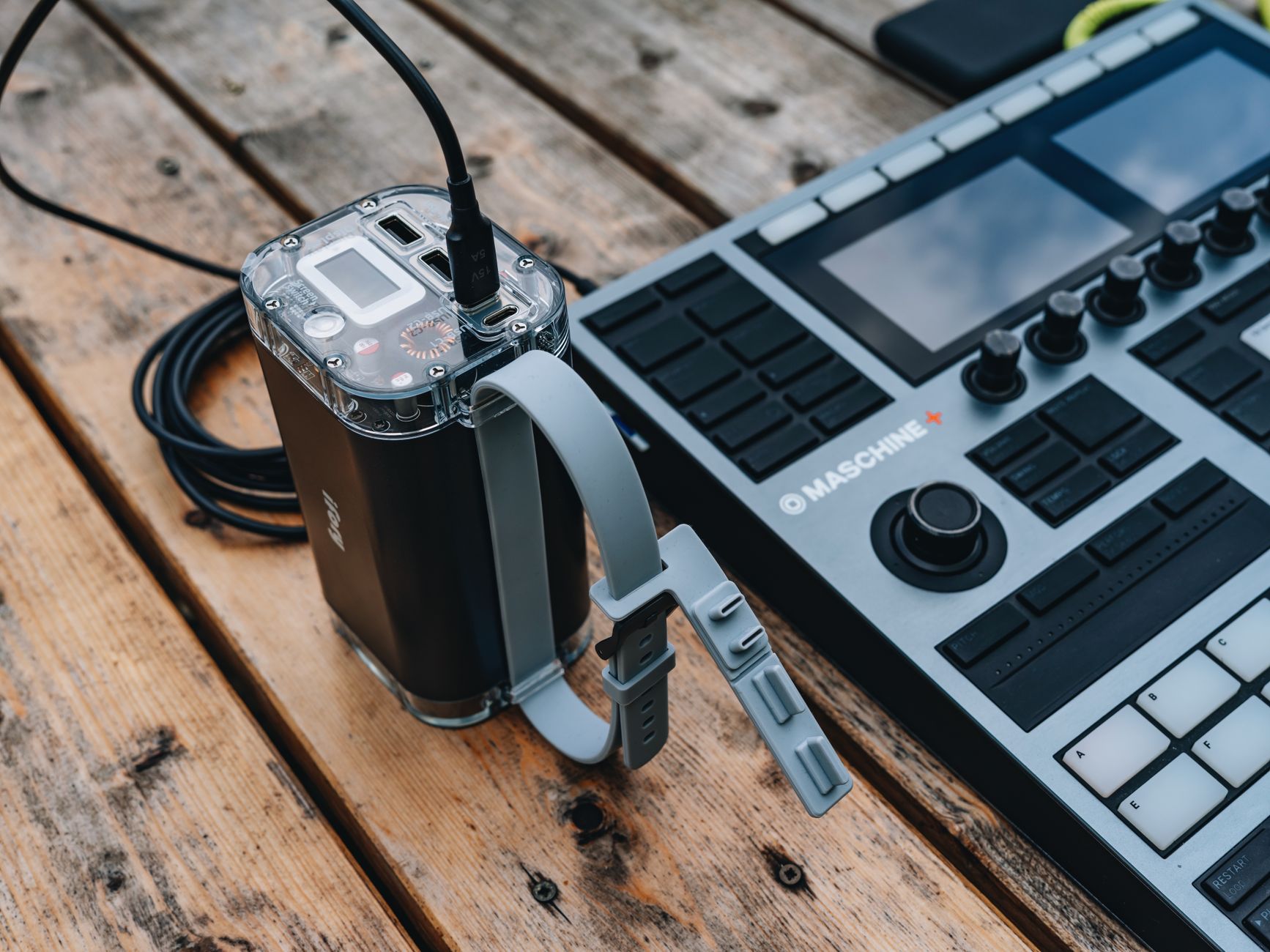
The RIVER 3 Plus is the unit I hand to most homeowners who want a small, safe 12V source they can carry with one hand. Its cigarette-lighter port delivers regulated 12V DC at up to 10A continuous, roughly 120W, which covers a CPAP machine, a small 12V fridge, LED strip lighting, a router, and phone charging at the same time.
Regulation is the part buyers overlook. An unregulated 12V socket sags as the battery drains, and some devices shut down or overheat once voltage drops below 11V. Runtime is where the math gets honest. At a 30W draw, a 286Wh battery gives you a bit over eight hours before the low-voltage cutoff trips. A 15W LED strip runs close to 15 hours. A wall recharge takes about an hour with the right adapter, and you can top it up from a car socket or a folding solar panel while you drive or camp.
The downsides are real. There is only one 12V socket, so running three 12V devices means a splitter and extra resistance. The battery is not user-replaceable, so when the cells fade you replace the whole unit. Per watt-hour it costs more than a lead-acid box, and it will not crank a dead truck engine. EcoFlow publishes full RIVER 3 Plus specifications on its own site if you want the manufacturer numbers. Check current pricing on the EcoFlow RIVER 3 Plus before you commit.
Key strengths:
- ✅ Regulated 12V output holds near 12.6V until the battery is nearly empty, so sensitive electronics do not brown out.
- ✅ Weighs roughly 8 lb, light enough for one person to carry from the garage to the basement.
- ✅ LiFePO4 cells are rated for thousands of cycles and do not vent hydrogen like flooded lead-acid.
- ✅ Recharges to 80 percent in about an hour from a wall outlet, which matters when a storm is already rolling in.
- ✅ Runs a 30W CPAP draw for more than eight hours on a single charge.
- ❌ Only one 12V car port, so multi-device 12V setups need a splitter.
- ❌ The battery is sealed inside the case and cannot be swapped in the field.
- ❌ Costs more per usable watt-hour than a simple deep-cycle battery box.
Who it’s for: Choose this if you want one portable box that runs 12V medical devices, lights, and a router through a two-day outage without any wiring.
2. Jackery Explorer 1000 v2 , Best for long 12V runtime on fridges, CPAP, and radio gear
When a load has to run all night, capacity beats portability. The Explorer 1000 v2 carries roughly 1,070Wh of LiFePO4 storage and feeds it out through a 12V car port rated at 10A. That is the same 120W ceiling as the smaller unit, but the tank behind it is nearly four times bigger. A 12V compressor fridge averaging 45W will run for well over 20 hours. That is the difference between saving your freezer contents and throwing them out.
We ran the refrigerator runtime math on both a 12V chest fridge and a 120V bar fridge. The 12V route wins every time because you skip the inverter. Converting 12V DC up to 120V AC and back down to 12V inside a fridge adapter throws away 15 to 20 percent of your stored energy as heat. If a device has a native 12V input, use it.
The trade-offs are weight and cost. At around 40 lb this is a two-hand lift, and a full wall recharge takes about two hours. There is still only one 12V socket, and some compressor fridges pull enough inrush current on startup to trip the port. Check the rated amps on your fridge label before you commit. If the runtime math works for your loads, check the Jackery Explorer 1000 v2 on Amazon.
Key strengths:
- ✅ Roughly 1,070Wh of LiFePO4 capacity delivers long overnight runtime on 12V loads.
- ✅ Handles a 45W average fridge draw for more than 20 hours on one charge.
- ✅ The native 12V car port avoids the conversion loss you get running a 12V device through the AC inverter.
- ✅ Covers 1,500W of continuous AC load as well, so it can run a sump pump or a small heater briefly.
- ✅ Accepts solar input, so a folding panel can refill it during a multi-day outage.
- ❌ About 40 lb, so moving it up and down stairs is a two-person job.
- ❌ One 12V socket only, and some compressor fridges trip the port on startup.
- ❌ Costs substantially more than a deep-cycle battery box with the same usable watt-hours.
Who it’s for: Pick this if your main 12V load is a fridge, a CPAP, or radio gear that needs to run through the night and into the next day.
3. NOCO Boost Plus GB50 , Best for jumping a dead 12V vehicle or generator battery
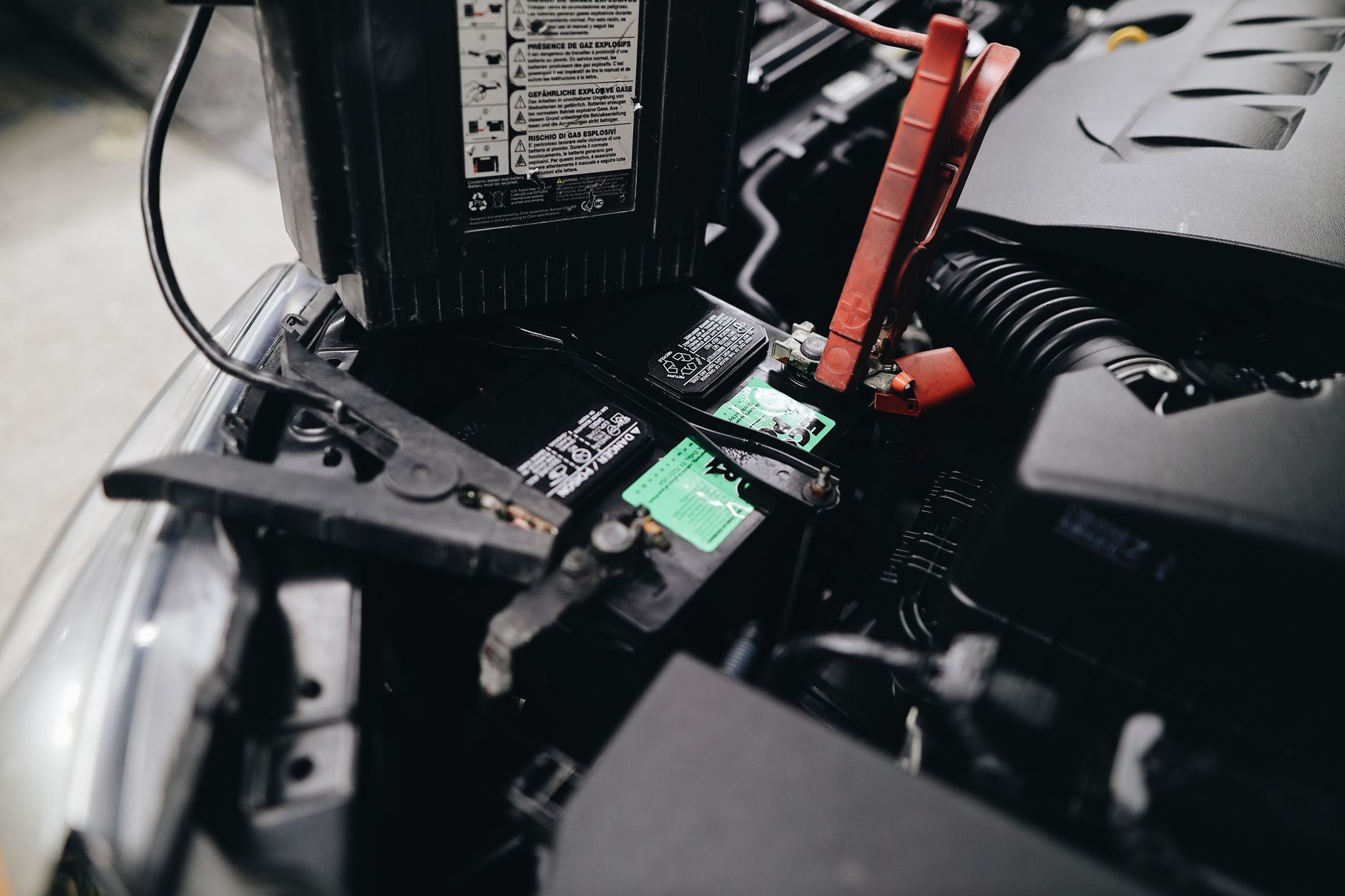
Different job, different tool. The GB50 is a pocket-sized lithium jump starter that pushes up to 1,500A of peak current through 12V clamp leads. That is enough for most four-cylinder and small six-cylinder gasoline engines at -20C, which is about the temperature where a tired battery finally quits in an Ontario driveway. It holds a charge for months and will not spark if you connect the clamps backwards.
Where buyers get confused is the output. The GB50 gives you 12V through the clamps for cranking, plus USB ports for phones. It is not a continuous 12V supply. You cannot run a CPAP off it all night, and you should not leave the clamps connected to a battery for hours. Treat it as a starting tool and an emergency phone charger, nothing more.
For a cottage, a second vehicle, or a generator with a small 12V starting battery, it earns its shelf space. For whole-home backup it is a companion piece, not the main event. Keep one in the trunk and one next to the generator, and you will never be stuck pull-starting equipment in the rain.
Key strengths:
- ✅ Delivers up to 1,500A of peak current for cranking a cold 12V engine.
- ✅ Fits in a glovebox and holds its charge for months between uses.
- ✅ Reverse-polarity and spark-proof protection prevents the classic clamp mistake.
- ✅ Doubles as a USB power bank for phones during an outage.
- ✅ Works as a backup starting source for a generator with a small 12V battery.
- ❌ Not a continuous 12V supply, so it cannot run devices for hours.
- ❌ Clamp leads are for cranking only and should not be left connected.
- ❌ The internal battery is small, so USB charging capacity is limited.
Who it’s for: Buy this if you need to start a dead car, mower, or generator, not if you need to run 12V electronics overnight.
4. Minn Kota Trolling Motor Power Center with Group 27 AGM Battery , Best raw 12V amp-hours per dollar
Sometimes the simplest answer wins. A plastic battery box with a built-in 12V socket, a push-button circuit breaker, and a group 27 deep-cycle AGM battery gives you roughly 600 usable watt-hours for far less than a lithium power station. There is no inverter, no firmware, and almost nothing to fail. The output is raw battery voltage, so it starts near 12.8V and slides toward 12.0V as you draw it down.
Depth of discharge is the catch. A lead-acid battery cycled below 50 percent sulfates and dies early, so a 100Ah battery gives you about 50Ah of usable capacity. That is still 600Wh at 12V, enough to run a 30W load for close to 20 hours. That figure matters if you are running medical equipment through an outage on a fixed budget.
Weight is the other issue. A group 27 AGM tips the scale around 60 lb, portable in the way a bag of concrete is portable. Flooded versions vent hydrogen while charging, so they belong in a garage or shed, never a bedroom. Sealed AGM is safer indoors, but it is still heavy and still only half usable.
Key strengths:
- ✅ Roughly 600Wh of usable 12V capacity at a fraction of the cost per watt-hour.
- ✅ No inverter and no electronics, so there is almost nothing to fail in a storm.
- ✅ The built-in circuit breaker and 12V socket come wired and ready to use.
- ✅ The battery is replaceable, so the box outlives the cells.
- ✅ Any auto parts store can test or charge it, which helps in a rural outage.
- ❌ About 60 lb with the battery installed, which is a two-hand carry.
- ❌ Lead-acid only gives you about half its rated capacity before you damage it.
- ❌ Flooded versions vent hydrogen and need a ventilated space, and even AGM needs care.
Who it’s for: Choose this if you have one fixed spot for 12V loads and you want maximum runtime for the lowest cost.
5. Renogy 12V 100Ah LiFePO4 Battery with Fused Distribution Box , Best long-term 12V storage for cottages and basements
This is the build-it-once option. A 100Ah LiFePO4 battery stores about 1,280Wh, and unlike lead-acid you can use 80 to 90 percent of that without wrecking the cells. That is over 1,000 usable watt-hours in a package weighing roughly 26 lb, less than half of a comparable AGM. The built-in battery management system handles over-discharge, short circuits, and cell balancing.
Pair it with a fused 12V distribution block and you can run a DC lighting circuit, a 12V fridge, a ham radio, and a router from one battery. The chemistry is sealed and stable, so it can live in a basement utility room with no venting concerns. In a Canadian winter that is a genuine advantage over flooded lead-acid.
Two catches. LiFePO4 cells should not be charged below 0C, and most reputable brands build in a low-temperature cutoff that simply refuses the charge until the battery warms up. You also need a charger and fuses. A 20A lithium charger refills a 100Ah battery from 20 percent to full in about five hours. Every 12V branch needs its own fuse, because an unfused lithium battery can push enough current to melt a wire in seconds.
Key strengths:
- ✅ About 1,000 usable watt-hours, roughly double what the same weight of lead-acid delivers.
- ✅ Sealed chemistry can be stored indoors with no venting or hydrogen risk.
- ✅ The built-in BMS handles over-discharge, over-current, and cell balancing automatically.
- ✅ Rated for thousands of cycles, so it outlasts three or four lead-acid replacements.
- ❌ Charging stops below 0C on most models, so a cold garage battery needs warming first.
- ❌ Requires a separate lithium-compatible charger and fused distribution hardware.
- ❌ Higher upfront cost than the AGM equivalent, even though it lasts far longer.
Who it’s for: Pick this if you are building a permanent 12V bank for a cottage, shed, or basement and you want it to last a decade.
6. Renogy 100W 12V Solar Starter Kit , Best for refilling a 12V battery during long outages
A 12V battery is only useful if you can refill it. During a multi-day outage, a portable solar kit is the quietest way to put energy back into a bank without burning a drop of gasoline. A 100W panel through a 20A MPPT controller pushes roughly 5 to 6A into a 12V battery at peak sun, which works out to about 30Ah on a good southern Ontario day. That replaces roughly a third of a 100Ah battery’s capacity.
Angle matters more than panel size in winter. A flat panel in December collects almost nothing. Tilt it toward the sun, clear the snow off, and accept that a December day might yield only 8 to 10Ah. In May you will get three times that, so the same kit behaves like completely different equipment depending on the month.
The kit does not replace a generator for heavy loads. A 100W panel makes about as much power as a single old-fashioned light bulb. For keeping a 12V battery topped up while it runs a CPAP and a few lights, it works, costs nothing to run, and makes no noise.
Key strengths:
- ✅ Adds roughly 30Ah per sunny day to a 12V battery in summer conditions.
- ✅ Silent and fuel-free, which matters during an outage when gas stations are closed.
- ✅ The MPPT controller squeezes more power out of the panel than a cheap PWM unit.
- ✅ Stores flat and sets up in minutes on a driveway or balcony.
- ✅ Scales up later by adding a second panel to the same controller.
- ❌ Winter output in Ontario drops to a small fraction of the summer rating.
- ❌ 100W will not run heavy loads directly, it only charges the battery.
- ❌ Panels need tilting and snow clearing to produce anything in January.
Who it’s for: Buy this if you already have a 12V battery bank and want a fuel-free way to keep it charged through a multi-day outage.
Frequently Asked Questions
What is a portable 12V power supply actually used for?
The most common jobs are running a CPAP machine overnight, powering a 12V fridge or cooler, charging phones and radios, and lighting a room with 12V LED strips. A second group of buyers uses them to jump start a car or a generator. Those are different products with different output behavior, so decide which job matters most before you shop.
Can I run a CPAP machine off a portable 12V power supply?
Yes, provided the unit has a regulated 12V car port and you use the correct DC adapter for your machine. A 286Wh battery gives roughly eight hours at a 30W draw, and a 1,070Wh unit will cover several nights. Always turn off the humidifier and heated tube, which can triple the draw.
How long will a 12V battery run a fridge?
A 12V compressor fridge that averages 45W will run for over 20 hours from a 1,070Wh power station. Larger camper fridges pull more, so check the rated amps on the label. Running a 120V fridge through an inverter instead costs you another 15 to 20 percent in conversion losses.
Do I need a licensed electrician for 12V wiring in Ontario?
If the work touches your home’s fixed wiring, yes. The Electrical Safety Authority requires that new circuits, including a hardwired 12V distribution system, be installed by a licensed electrical contractor with a permit. Plug-in battery boxes and power stations do not need a permit.
Is a portable 12V power supply the same thing as a generator?
No. A battery based 12V supply stores energy and makes no noise, exhaust, or carbon monoxide. A generator creates electricity by burning fuel and must run outdoors. Many homeowners use both, with the generator recharging the 12V battery during a long outage.
Can I recharge a 12V power supply from my car?
Most power stations and battery boxes accept a 12V car socket charging cable, which adds roughly 100W while you drive. That is slow compared to a wall outlet. A folding solar panel or a small generator will refill a drained battery far faster.
What Should You Remember?
- Match the output type to the load. A regulated 12V car port runs electronics, while clamp leads only crank an engine for a few seconds.
- Capacity is not runtime. A 286Wh battery gives about eight hours at a 30W draw, not eight hours at any load you plug in.
- Skip the inverter when you can. Running a native 12V device from a 12V port avoids the 15 to 20 percent loss of converting up to 120V and back down.
- Lead-acid gives you half. A 100Ah AGM bank only yields about 50Ah of usable capacity before the plates start to sulfate.
- Cold stops lithium charging. Most LiFePO4 batteries refuse to charge below 0C, which is a real problem in an unheated Ontario garage.
- Certification is not optional. Buy only gear carrying a CSA, UL, or ETL mark, and let a licensed electrician handle any fixed wiring.
- Ventilate anything that burns or vents. Generators and flooded batteries both need outdoor or well-ventilated space.
This article is for general information only. Always follow manufacturer instructions, local electrical codes, and hire a licensed electrician for transfer switches and standby generator installation. Carbon monoxide is deadly , never run a generator indoors.