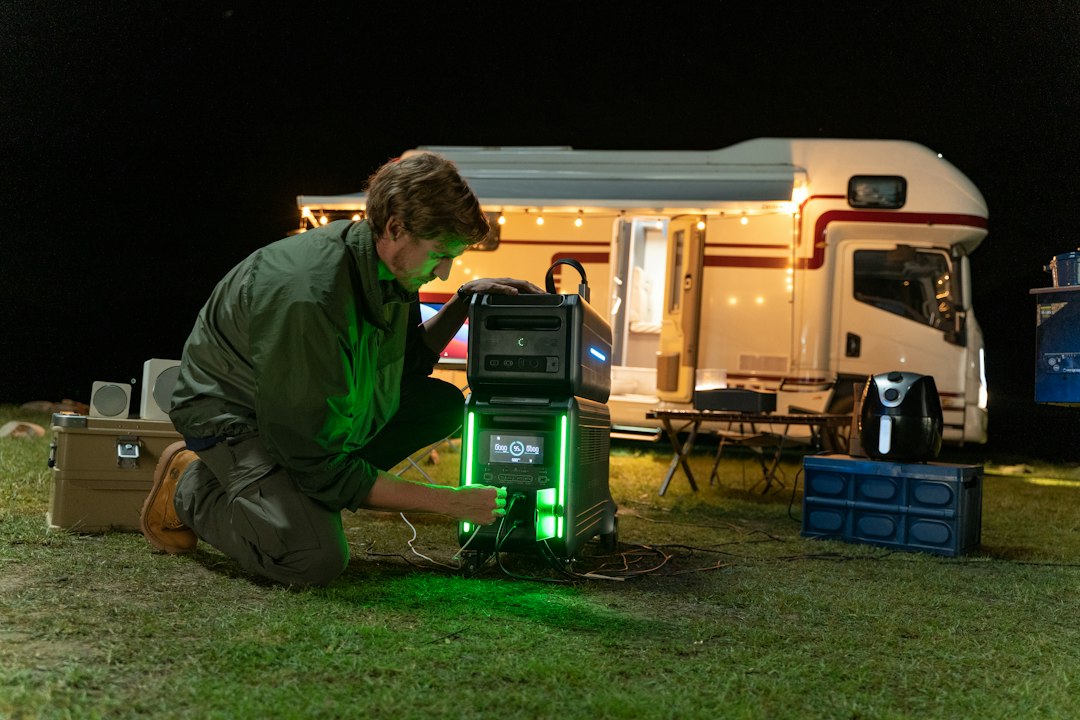
Ontario outages are rarely dramatic and rarely short. A February ice storm drops a feeder line and 60,000 homes sit dark for 18 hours. A summer storm takes out a rural hydro pole and a farm outside Peterborough waits three days for a crew. That pattern is why so many homeowners now keep a battery box in the basement. GRECELL builds one of the more affordable lines of lithium portable power stations sold in North America, and the brand shows up constantly in homeowner forums when people ask about a cheap first step into backup power. If you want the wider market view before you commit, our roundup of the best portable power stations covers where GRECELL sits against EcoFlow, Bluetti, and Jackery.
Here is the honest framing. GRECELL is a value brand, not a premium one. Its units use lithium-ion or LiFePO4 cells depending on the model year, pure sine wave inverters on most current models, and a standard AC recharge brick instead of the fast-charging wall adapters you find on flagship competitors. That means slower recharge and fewer app features. It also means a 1,000Wh unit often costs meaningfully less than the equivalent EcoFlow. For an Ontario homeowner who wants to run a fridge, a furnace blower, and a few lights through a 12 hour outage, that trade can be worth it. Check the certification label before you buy anything. The CSA Group publishes the electrical and carbon monoxide safety standards that portable power equipment sold in Canada should meet.
My method for this comparison was simple. I worked from GRECELL’s published specs for each model tier, then ran the watt-hour math myself. Capacity in watt-hours multiplied by roughly 0.85 for inverter losses gives you usable energy. Divide that by the average draw of the load, not the peak draw, and you get a realistic runtime. A fridge that pulls 150 running watts but cycles at a 35 to 40 percent duty cycle averages closer to 60 watts. That is why a 300Wh unit keeps a fridge cold for about four hours while a 2,000Wh unit pushes toward a full day. Anyone who quotes runtime without mentioning duty cycle is guessing.
Who should keep reading? Ontario homeowners with a gas furnace, a sump pump, a CPAP machine, or a basement freezer, and a budget below what a standby generator costs. Who should close the tab? Anyone who wants to run central air conditioning, an electric range, or a 240 volt well pump through a multi-day outage. Batteries at this price point cannot do that, and pretending otherwise gets people disappointed or hurt. If you are prepping for the specific pattern of a January ice storm, our Ontario ice storm power outage prep guide covers the sequence most households should follow. Read this as a buying guide for the battery tier, not as a replacement for a generator.
How Do the Top Options Compare?
| Model | Best For | Running Watts | Surge Watts | Capacity | Check Price |
|---|---|---|---|---|---|
| GRECELL 300W | CPAP and lights overnight | 300W | 600W | 296Wh | Check price |
| GRECELL 500W | Router, laptop, small loads | 500W | 1000W | 520Wh | Check price |
| GRECELL 1000W (S1000 tier) | Fridge plus furnace blower overnight | 1000W | 2000W | 999Wh LiFePO4 | Check price |
| GRECELL 2000W | Multi-day essentials, sump pump | 2000W | 4000W | about 2000Wh | Check price |
| GRECELL 200W Foldable Solar Panel | Off-grid recharge in summer | 200W output | 240W peak | No storage | Check price |
Specs above reflect GRECELL’s published figures for the current model year. The brand revises cells and inverter boards between production runs, so confirm the watt-hour rating, the surge rating, and the certification mark on the actual listing before you buy. None of these units is a whole-house solution on its own, and none of them should be connected to household wiring without a listed transfer switch or inlet installed by a licensed electrician.
1. GRECELL 300W Portable Power Station , Best for CPAP machines, phones, and lighting overnight
The GRECELL 300W is the entry ticket. It pairs a 296Wh battery with a 300W pure sine wave inverter and a 600W surge rating, and it weighs just under 8 pounds, so carrying it up from the basement during a blackout is a one-hand job. Connections cover two AC outlets, USB-A, USB-C PD, and a 12V car socket. Wall recharge takes five to six hours. Nothing about it is fast and nothing about it is premium, which is exactly the point at this price.
Runtime math decides whether the unit earns a spot in your plan. At roughly 85 percent inverter efficiency you get about 250 usable watt-hours. A CPAP drawing 40W runs close to six hours. Two LED lamps plus a phone charger pull under 25W together, so that combination stretches past nine hours. Add a laptop at 60W and you are down to three hours. If someone in the house depends on a medical device overnight, read our guide to powering medical equipment during an outage before you buy anything. Six hours is not a full night of sleep.
What it cannot do matters more than what it can. A modern fridge needs 800 to 1,200W to start its compressor, and this model will trip into overload every single time. Space heaters, kettles, and microwaves are out too. Treat it as a lighting and communications box that happens to have a car socket, not a kitchen backup box.
Key strengths:
- ✅ Weighs under 8 pounds, so one person can move it between floors
- ✅ Pure sine wave output keeps laptops and CPAP power supplies happy
- ✅ Costs far less than any 1,000Wh competitor
- ✅ Silent operation with no exhaust and no carbon monoxide risk indoors
- ✅ USB-C PD output charges a phone or tablet at full speed
- ❌ The 600W surge cannot start a refrigerator compressor
- ❌ Lithium-ion cells on this tier often cycle out sooner than LiFePO4
- ❌ Slow wall recharge of five to six hours limits how often you can cycle it
Who it’s for: Buy it if you need overnight CPAP, phones, and a couple of lamps, and nothing with a motor attached.
2. GRECELL 500W Portable Power Station , Best for routers, laptops, and short overnight outages
Step up to the GRECELL 500W and you get roughly 520Wh of storage, a 500W continuous inverter, and a 1,000W surge rating. Weight climbs to around 12 pounds. The port layout is nearly identical to the 300W model, with two AC outlets, USB-A and USB-C, and a 12V output, plus a DC input that accepts solar. This is the tier most people buy when they want a router, a modem, a laptop, and a few lamps to survive a 12 hour outage.
The math improves in a way you can feel. A network closet pulling 15W, a laptop at 60W, and two lamps at 20W total average 95W. That works out to roughly four and a half hours of runtime. Drop the laptop and you double it. A fridge is still a stretch. Compressor startup on a typical 18 cubic foot model lands between 800W and 1,200W, and a 1,000W surge rating leaves almost no headroom for the compressor and the defrost heater cycling at the same moment. Some units will start. Most will not. Our breakdown of how long a power station runs a refrigerator walks through the duty cycle math in detail.
Where this tier frustrates people is recharge time. Four to five hours on the wall charger means you cannot cycle it quickly during a long outage. Pair it with a folding solar panel and a sunny July afternoon and you can top it up in about four hours of good light. In January, forget it entirely. Also confirm the cell chemistry on the listing. Some 500W models ship with lithium-ion, and those packs have a shorter service life than LiFePO4.
Key strengths:
- ✅ About 520Wh of storage in a 12 pound package
- ✅ Handles a router, modem, laptop, and lamps for a full evening
- ✅ 1,000W surge starts small motors and some fans
- ✅ Accepts solar input for off-grid recharge
- ✅ Cheaper than any comparable 1,000Wh unit
- ❌ 1,000W surge is not enough for most refrigerator compressors
- ❌ Four to five hour wall recharge makes cycling awkward in long outages
- ❌ Cell chemistry varies by model year, so check before ordering
Who it’s for: Choose this if your outage plan is about staying connected and lit, not about keeping food cold.
3. GRECELL 1000W Portable Power Station , Best overall pick for most Ontario homes
The 1,000W tier is where GRECELL starts to look like real backup equipment. Expect roughly 999Wh of LiFePO4 storage, a 1,000W continuous inverter, and a 2,000W surge rating in a package around 22 pounds. LiFePO4 matters because the chemistry handles 3,000 or more charge cycles and holds up better in a cold basement than the lithium-ion cells on the cheaper models. Check price on this tier before you buy anything smaller.
Now the real runtime numbers. A fridge averaging 60W after duty cycle runs about 14 hours on a full charge. That covers an overnight outage without you touching the unit. A modern gas furnace with an ECM blower draws 400 to 700W while running, and during a January cold snap it might run 30 to 40 percent of the time, so the average lands near 200W. Pair the furnace with the fridge and you are looking at four to six hours of combined runtime. That is enough to keep pipes from freezing overnight. It is not enough for a three day ice storm.
Two details separate this from the cheaper models. First, the 2,000W surge will start most modern fridge compressors and most ECM furnace blowers. Older PSC blowers and 240V well pumps will still trip it. Second, pure sine wave output at this wattage is safe for furnace control boards and variable speed motors. A modified sine wave inverter can make a control board misbehave or a motor run hot. If your home has a well pump rather than municipal water, read up on powering a well pump during an outage separately, because this tier will not do it.
Key strengths:
- ✅ LiFePO4 cells rated for thousands of charge cycles
- ✅ 2,000W surge starts most modern fridge compressors and ECM furnace blowers
- ✅ Runs a refrigerator for roughly 14 hours on a single charge
- ✅ Pure sine wave output protects furnace control boards
- ✅ Still light enough for one person to carry at about 22 pounds
- ❌ Will not start a 240V well pump or an older PSC furnace blower
- ❌ Wall recharge still takes several hours, so back to back outages are a problem
- ❌ App and monitoring features lag behind EcoFlow and Bluetti
Who it’s for: Best for an Ontario homeowner who wants the fridge and the furnace blower to survive an overnight outage without buying a generator.
4. GRECELL 2000W Portable Power Station , Best for multi-day outages and heavier loads
At the top of the GRECELL lineup sits the 2,000W class, with roughly 2,000Wh of LiFePO4 storage, a 2,000W continuous inverter, and a 4,000W surge rating. It weighs close to 50 pounds, which means it lives where you put it and stays there. Run the numbers and the picture changes. A fridge averaged at 60W runs about 28 hours. Add a furnace blower averaging 200W and you get roughly 10 to 12 hours of combined runtime. Add a one third horsepower sump pump cycling during a spring storm and the clock drops again. Check price against a small standby generator before you decide.
Plenty of buyers want to plug one of these into a house circuit and backfeed the panel. Do not. Ontario requires a proper transfer switch or a listed inlet box with a mechanical interlock, installed by a licensed electrician, and the Electrical Safety Authority is the body that enforces those rules. A suicide cord plugged into a dryer outlet has killed utility workers who had no idea the line was live. The safe pattern for a battery this size is a generator inlet plus a manual interlock, and even that needs an electrician to sign off.
The second reason to slow down is cost context. Once you are spending at the 2,000W battery tier, a small standby generator or a home battery with an automatic transfer switch starts to compete on capability. A portable battery still wins on portability and on silence, and unlike a gas generator it produces no carbon monoxide at all. Health Canada is blunt about what happens when a generator runs in a garage or near a window. If you plan to run a gas unit as well, read our generator safety tips before the first storm hits.
Key strengths:
- ✅ About 2,000Wh covers a refrigerator for more than a full day
- ✅ 4,000W surge handles fridge, furnace blower, and sump pump starts
- ✅ No exhaust and no carbon monoxide, so it is safe inside the house
- ✅ LiFePO4 chemistry tolerates repeated deep discharges
- ✅ Silent enough to sit in a hallway overnight
- ❌ Around 50 pounds, so it is not genuinely portable in practice
- ❌ At this price a standby generator or home battery deserves a look
- ❌ Slow recharge limits how many outages it can cover back to back
Who it’s for: Choose it if you want to ride out a two or three day outage with a fridge, a furnace, and a sump pump running on battery power.
5. GRECELL 200W Foldable Solar Panel , Best for summer recharge and cottage use

A battery box is only as good as your ability to refill it. GRECELL’s 200W foldable panel is the matching accessory: four or five folding sections, a kickstand, a carry handle, and a bundle of adapters for 8mm DC, Anderson, and MC4 connections. Folded down it is about the size of a briefcase and weighs roughly 15 pounds. Output is rated at 200W peak, with many listings quoting a 240W surge figure that reflects ideal conditions rather than anything you will see on a cloudy day.
Ontario reality check. Rated wattage assumes full sun at a perpendicular angle and 25 degrees Celsius cell temperature. In July around noon you might push 140 to 160W into the battery. On an overcast January afternoon you will be lucky to see 20 to 40W, and snow on the glass drops that to zero. Recharging a 1,000Wh station from empty takes eight to ten hours of genuinely good sun. That is a two day job in most Ontario shoulder seasons.
So who buys one? Cottage owners, campers, and anyone who wants a slow trickle charge during a summer outage. If your plan is winter storm resilience, put the money into battery capacity instead of panels. Our roundup of solar panels for camping covers the foldable category in more depth. Rigid roof panels cost less per watt if the panel is going to stay in one place, and you can read more about that path in our guide to rooftop solar for home backup.
Key strengths:
- ✅ Folds into a briefcase shape for storage in a closet or truck bed
- ✅ Adapters for 8mm, Anderson, and MC4 cover most power stations
- ✅ Rated 200W peak with a 240W surge figure on most listings
- ✅ No fuel, no noise, and no exhaust
- ✅ Pairs with GRECELL stations without extra hardware
- ❌ Winter output in Ontario can fall to 20 percent of the rating
- ❌ Costs more per watt than a rigid panel of the same size
- ❌ Needs repositioning through the day to stay aimed at the sun
Who it’s for: Buy it if you camp, cottage, or want a summer top-up source, not as a winter outage plan.
Frequently Asked Questions
Is GRECELL a reliable brand for home backup in Ontario?
GRECELL sits in the value tier of the portable power station market. The units work, the pure sine wave inverters are fine for electronics, and the LiFePO4 models are built to last. Support and app features are thinner than what EcoFlow or Bluetti provide, so buy from a seller with a clear return window.
Can a GRECELL power station run my gas furnace?
It depends on the blower. A modern ECM blower draws 400 to 700 running watts and needs roughly 1,200 to 1,500 watts to start, which a 1,000W model can usually handle. Older PSC blowers can pull double that at startup and will trip anything below the 2,000W tier.
How long will a GRECELL 1000W run a refrigerator?
About 14 hours. A typical fridge draws 150 running watts but only cycles 35 to 40 percent of the time, so the average load is close to 60 watts. At 999Wh and 85 percent inverter efficiency, that lands near 14 hours.
Do I need an electrician to connect a GRECELL to my house wiring?
Yes, if you want to power household circuits. Ontario requires a transfer switch or a listed inlet with a mechanical interlock, and backfeeding through a receptacle is illegal and lethal to utility crews. Plugging appliances directly into the station’s own outlets does not require an electrician.
Can I recharge a GRECELL power station with solar in an Ontario winter?
You can, but do not count on it. A 200W panel that produces 150W in July may produce 20 to 40W under January cloud, and snow covering the glass stops production entirely. Winter resilience comes from battery capacity, not from panels.
Are GRECELL power stations certified for sale in Canada?
Most current models carry certification marks from recognized testing labs, but listings change and grey-market sellers exist. Check the label on the unit or the spec sheet on the listing before you buy, and avoid anything without a recognized certification mark.
What Should You Remember?
- Size by duty cycle, not peak watts. A 150W fridge averages about 60W, which is why a 1,000Wh station runs it for roughly 14 hours.
- Match the tier to the load. The 300W and 500W models handle lights, routers, and CPAP machines. Fridges and furnace blowers need 1,000W or more.
- Surge rating decides what actually starts. Compressors and motors need two to three times their running watts for a few seconds.
- Never backfeed a house circuit. Ontario requires a transfer switch or listed inlet installed by a licensed electrician.
- Batteries produce no carbon monoxide. That is the real safety advantage over a gas generator running during a storm.
- Winter solar is a rounding error. Budget for battery capacity first and panels second if you live in Ontario.
This article is for general information only. Always follow manufacturer instructions, local electrical codes, and hire a licensed electrician for transfer switches and standby generator installation. Carbon monoxide is deadly , never run a generator indoors.