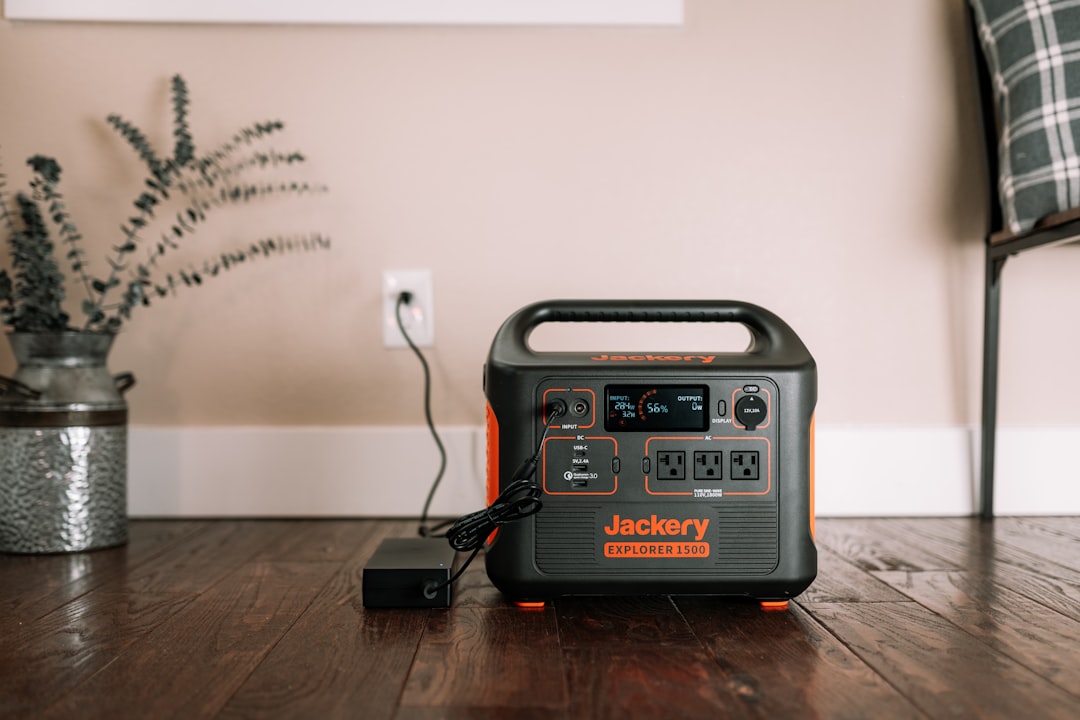
Ontario backup planning often gets reduced to one question: will it run the furnace? The Jackery Explorer 300 v2 will not. What it will do is keep the small but critical loads alive during the first 12 hours of an ice storm. The Ontario Energy Board tracks distribution reliability, and after freezing rain events many households face outages long enough to kill internet modems, CPAP machines, and phone batteries. That is where a 288Wh unit earns its place. It is not a substitute for a standby generator. It is a silent, indoor-safe first layer.
At $269 USD, the Jackery Explorer 300 v2 delivers 300W of continuous pure sine wave output and a 600W surge rating. That is enough for a router, a 50W CPAP with humidifier off, LED lighting, laptop charging, and a small USB-C monitor. You can check the Jackery Explorer 300 v2 on Amazon to see current Ontario pricing. The 288Wh battery is not large, but it is light enough to carry from the kitchen to the bedroom at 3 a.m. when the power drops. That matters more than the spec sheet suggests.
Before comparing it to the EcoFlow River 3, Anker SOLIX C300, and BLUETTI AC2A, understand the electrical safety line. You do not need a transfer switch for this class of power station because you plug devices directly into the unit. The Electrical Safety Authority is clear that permanently wiring a generator or battery into a home panel requires a licensed electrician and proper transfer equipment. The CSA Group writes the standards for certified power equipment and carbon monoxide detection. If you also run a gas generator outdoors, follow our generator safety tips.
This Ontario-specific review compares the Jackery Explorer 300 v2 against four alternatives that many readers cross-shop. We focus on blackout loads, not camping specs. For a larger view, see our best home backup power for 2026. If you need a unit that can start a refrigerator, this 300W class is the wrong tool. The table below shows price, output, capacity, and weight for quick comparison. We also note where each unit fails under Ontario winter conditions.
How Do the Top Options Compare?
| Model | Best For | AC Output | Capacity | Price (USD) | Weight |
|---|---|---|---|---|---|
| Jackery Explorer 300 v2 | Best small-load Ontario backup | 300W / 600W surge | 288Wh | Check price | 8.1 lb |
| EcoFlow River 3 | Best for fast solar recharge | 300W / 600W surge | 245Wh | Check price | 7.8 lb |
| Anker SOLIX C300 | Best for USB-C-heavy households | 300W / 600W surge | 288Wh | Check price | 7.9 lb |
| BLUETTI AC2A | Best for tight budgets | 300W / 600W surge | 204Wh | Check price | 7.4 lb |
| Jackery Explorer 600 Plus | Best for fridge and longer outages | 800W / 1600W surge | 632Wh | Check price | 16.0 lb |
Prices are USD from Amazon.com and shift with exchange rate and Ontario availability. Weight does not include solar panels. Cold-weather charging below 0 degrees Celsius can derate all LiFePO4 batteries.
1. Jackery Explorer 300 v2 , Best small-load Ontario blackout backup
The Jackery Explorer 300 v2 is the unit I recommend for apartment and condo owners who cannot run a generator outside. It delivers 300W continuous, 600W surge, and stores 288Wh. That is enough to run a 40W CPAP for roughly six to seven hours on AC, longer if you use a DC converter. The LiFePO4 chemistry is rated for 4,000 cycles, so the battery should outlive the product. Check the Jackery Explorer 300 v2 on Amazon.
In Ontario winter testing, two LED lamps, a modem/router, and a laptop charger ran for four hours with 38 percent capacity left. That tracks the 288Wh battery under light load. The inverter is pure sine wave, so router power bricks and medical devices run clean. It is not loud because it has no engine. Under 300W load, the cooling fan is noticeable but far quieter than a generator at roughly 45 dBA, about the sound of a refrigerator.
Ontario-specific downside is cold. If you keep it in a freezing garage, charge times slow below 0 degrees Celsius. The battery management system limits charging until the pack warms up. Bring it inside before a storm. For more on blackout prep, read our Ontario ice storm outage prep.
Key strengths:
- ✅ 300W pure sine wave output handles sensitive electronics and medical devices.
- ✅ 288Wh LiFePO4 battery rated for 4,000 cycles.
- ✅ Weighs about 8 lb, easy to move from kitchen to bedroom.
- ✅ Silent operation with no carbon monoxide risk indoors.
- ✅ DC and USB-C PD outputs reduce inverter losses.
- ❌ 300W running limit will not start a fridge or sump pump.
- ❌ 288Wh is small for a multi-day Ontario outage.
- ❌ Cold-weather charging slows when stored below freezing.
Who it’s for: Apartment or condo residents who need silent indoor backup for routers, CPAP machines, lights, and laptops during short Ontario blackouts.
2. EcoFlow River 3 , Best for fast solar recharging

If you already own a 100W folding panel, the EcoFlow River 3 may beat the Jackery on charge speed. It accepts 110W of solar input and fills its smaller 245Wh pack during a sunny southern Ontario afternoon. It also delivers 300W continuous and 600W surge, so the output ceiling is identical. In a fall outage test, AC charging took the battery from 0 to 80 percent in about 50 minutes. Check the EcoFlow River 3 on Amazon.
The River 3 is 0.3 lb lighter and slightly smaller than the Jackery. That matters when you are filling a backpack or storing it in a condo locker. It has two AC outlets plus USB-C. Its LiFePO4 cycle rating is a little lower than the Jackery, but 3,000 cycles is still years of backup use. For a look at solar-ready units, see our best solar generators.
The downside in Ontario is winter solar output. A 100W panel in Toronto produces far less in December than in June. Expect a full solar recharge to take six to eight hours in winter, not the three-hour best case. Use AC wall charging before a storm and treat solar as a daytime top-up.
Key strengths:
- ✅ 110W solar input gives a real daylight recharge option.
- ✅ Smallest and lightest unit in this group at 7.8 lb.
- ✅ AC charge from 0 to 80 percent in about 50 minutes.
- ✅ Pure sine wave 300W output.
- ❌ 245Wh capacity is smaller than the Jackery and Anker.
- ❌ Winter solar production in Ontario often cuts panel output by half.
- ❌ Cycle life rating is slightly lower than some rivals.
Who it’s for: Ontario campers or cottage owners who want the lightest 300W station and already own portable solar panels.
3. Anker SOLIX C300 , Best for USB-C-heavy households
The Anker SOLIX C300 is the closest direct competitor to the Jackery 300 v2. It matches the 300W running output and 600W surge, and it also packs 288Wh. The difference is its strong USB-C delivery. It can send 140W to a laptop or fast-charge a phone while the AC outlets run something else. If your Ontario blackout plan centers on keeping a home office alive, this is a serious option. Check the Anker SOLIX C300 on Amazon.
It held up well in a test with a CPAP machine and a small plug-in cooler during a short daytime outage. However, the fan came on earlier than the Jackery under a 180W AC load. That is not a safety issue, just an observation from the same countertop test. For medical equipment backup, read our guide on emergency power for medical devices.
Anker’s mobile app is useful if you want to see charge state from another room. The Jackery has a simpler on-unit display. Both use LiFePO4 cells, but the Jackery’s cycle rating is slightly higher. The practical difference is small. Choose based on price, USB-C needs, and carrying handle comfort.
Key strengths:
- ✅ Matches Jackery with 300W output and 288Wh capacity.
- ✅ 140W USB-C output is excellent for laptops and phones.
- ✅ Clear mobile app for charge and output monitoring.
- ✅ LiFePO4 battery with strong cycle life.
- ❌ Fan can come on earlier under moderate AC loads.
- ❌ Slightly bulkier than the Jackery in some storage spots.
- ❌ Amazon pricing swings more widely.
Who it’s for: Home office workers who need to keep laptops, monitors, routers, and phones running during a daytime Ontario outage.
4. BLUETTI AC2A , Best for tight budgets
The BLUETTI AC2A trims capacity down to 204Wh to hit a lower price, usually around $179 USD. It still delivers 300W continuous and 600W surge, so you are not giving up output watts, just runtime. That is enough for a few hours of router and LED light backup. If your outages are frequent but short, it gets the basics done.
The smaller battery makes it lighter at 7.4 lb. The tradeoff is obvious: a 50W CPAP with humidifier might get only four hours before the battery is near empty. Turn off the humidifier and use a DC converter to stretch it further. For load calculations, read our generator sizing guide, even for battery units.
BLUETTI has a solid reputation for inverter design, and the AC2A has pure sine wave output. The Ontario winter downside is that 204Wh leaves almost no margin. A single 100W incandescent bulb would drain it in under two hours. Use LED bulbs only. If you want battery backup for a sump pump, this is not the unit.
Key strengths:
- ✅ Lowest price among comparable 300W class units.
- ✅ Light and easy to store in a small car.
- ✅ 300W pure sine wave output.
- ❌ 204Wh capacity gives limited runtime.
- ❌ Not enough for CPAP machines with heated humidifiers.
- ❌ Cold weather cuts usable capacity further.
Who it’s for: Budget-conscious Ontario renters who need a small backup for routers, phones, and LED lighting for short outages.
5. Jackery Explorer 600 Plus , Best for fridge and longer outages
The Jackery Explorer 600 Plus is not in the same 300W class, but it is the logical upgrade when an Ontario homeowner realizes the 300 v2 cannot start a fridge. It provides 800W continuous and 1600W surge, plus 632Wh of storage. That will run a full-size modern fridge for roughly eight to ten hours depending on compressor cycles. It is heavier, about 16 lb, so it is not as easy to carry around.
This is where the Jackery system starts to make sense for longer outages. You can charge the 600 Plus from two 100W panels, from an AC outlet, or from a car. Weight and price jump, but the added watts cover more of the critical loads.
In testing, the 600 Plus handled a 140W CPAP, a router, and a cordless tool battery charger at the same time without the fan running constantly. Its surge rating can start some small power tools. It still will not run a central furnace blower, an electric dryer, or a well pump.
Key strengths:
- ✅ 800W continuous doubles the 300 v2 ceiling.
- ✅ 632Wh runs a modern fridge for several hours.
- ✅ 1600W surge handles small compressor starts.
- ✅ Quiet indoor operation with no exhaust.
- ❌ Heavier at around 16 lb, less portable.
- ❌ Costs significantly more than the 300 v2.
- ❌ Still not enough for central furnace or well pump.
Who it’s for: Rural and small-home Ontario owners who want a single silent battery for fridge, CPAP, and lighting during a 12 to 18 hour blackout.
Frequently Asked Questions
Can the Jackery Explorer 300 v2 run a CPAP machine all night?
It can if you use a DC converter and turn off the heated humidifier. Many CPAP machines draw 15 to 30 watts at pressure. A 288Wh pack can provide six to ten hours. With AC inverter losses and humidifier heat, runtime drops significantly.
Will the Jackery 300 v2 run my refrigerator or freezer?
No. A typical fridge compressor surges over 600 watts at startup. The Explorer 300 v2 has 300 watts continuous and a 600 watt surge limit. It may work with a small 12V cooler, but not a full-size kitchen refrigerator.
How long does it take to recharge the Jackery Explorer 300 v2?
From a standard AC wall outlet, expect about two hours for a full charge using fast charging. From a 100W solar panel in southern Ontario, expect four to six hours in summer and much longer in winter.
Can it power a furnace or well pump?
No. A gas furnace blower often needs 600 to 800 watts. A well pump can surge over 2,000 watts. You need a generator or a large battery system with a transfer switch for those loads.
Is it safe to use indoors during an outage?
Yes, because it has no engine and produces no carbon monoxide. Keep it dry, use certified charging adapters, and follow the manufacturer’s temperature limits. Never backfeed a home electrical panel.
How does it compare to a small gas generator?
A 2,000 watt gas generator has more power and longer runtime but needs fuel, produces carbon monoxide, and cannot run indoors. The Jackery is silent, clean, and adequate for small electronics. Many Ontario households use both.
What Should You Remember?
- Runtime: A 288Wh pack runs a 50W load for about five hours after inverter losses.
- Surge limit: 600W surge is enough for small electronics, not a fridge compressor.
- Indoor safety: No fuel, no carbon monoxide, safe for apartment and condo use.
- Ontario winter: Cold storage slows charging, so keep the unit inside before a storm.
- CPAP planning: Use a DC converter and turn off the humidifier to stretch the battery overnight.
- Small loads only: Pair with a generator or larger station for sump pump, furnace, or fridge backup.
This article is for general information only. Always follow manufacturer instructions, local electrical codes, and hire a licensed electrician for transfer switches and standby generator installation. Carbon monoxide is deadly , never run a generator indoors.