
RV season in Ontario runs from the May long weekend to Thanksgiving, and the electrical pedestals at most provincial parks top out at 30 amps. That is enough for lights, a fridge and a laptop charger. Add a roof air conditioner or an induction cooktop and the pedestal breaker trips. A portable power station fills that gap, and unlike a gas generator it can run inside the coach or under the awning with no exhaust at all. If you already own a small unit for tailgates, our portable power station guide explains where those compact models stop being useful. This comparison covers five units that hold up under real trailer loads.
The picks below were sorted on four measured numbers: continuous AC output, surge output, usable capacity and charge time. Real campsite loads matter far more than the number on the box. A 13,500 BTU roof air conditioner draws about 1,500W running and spikes past 3,000W on compressor startup, so a station rated at 1,000W will not get it off the line no matter what the marketing claims. Runtime figures here are calculated at 85 percent inverter efficiency, which is where most lithium units land under a steady 500W load. There is a second use case worth naming. Outage statistics show that the same battery you carry in the trailer can keep a furnace fan and fridge alive at home during a winter storm.
Safety rules do not soften because the power source is smaller. RV shore inlets, transfer switches and any permanent wiring in a trailer fall under Ontario electrical rules, and the Electrical Safety Authority requires a licensed electrician for anything beyond plugging into an existing outlet. Carbon monoxide is the other hard line. Battery stations produce none, which is why one can sit on the dinette table, but a gas generator stays outside and away from windows and vents. The CSA Group publishes the standards behind both the appliances and the CO alarms you should have on board, and our generator safety guide covers placement distances in detail.
Choosing comes down to three questions. How many watts does your largest single load need at startup? How many hours do you need it to run? How much weight can you lift into a storage bay? A 2,000Wh station weighs between 40 and 55 pounds, which one person can handle. Anything above 3,000Wh usually means two people or a dedicated cart. Solar input matters as well, since most Ontario parks enforce quiet hours and a 300W to 400W folding array will refill a mid-size unit in a full day of decent sun. Buy for the load you actually run, not the one you imagine running.
How Do the Top Options Compare?
| Power Station | Best For | Capacity | Running Watts | Surge Watts | Check Price |
|---|---|---|---|---|---|
| EcoFlow DELTA Pro 3 | Full-time boondocking | 4,096Wh, expandable past 12kWh | 4,000W | 8,000W | Check price |
| Jackery Explorer 3000 Pro | Running RV air conditioning | 3,024Wh | 3,000W | 6,000W | Check price |
| BLUETTI AC200L | Mid-range value with a 30A RV port | 2,048Wh | 2,400W | 3,600W | Check price |
| Anker SOLIX F2600 | High-surge and home dual use | 2,560Wh | 2,400W | 3,600W | Check price |
| Goal Zero Yeti 1500X | Compact solar-first setups | 1,516Wh | 2,000W | 3,500W | Check price |
Wattage, capacity and charge-time figures come from manufacturer specifications and are rounded. Runtime estimates assume 85 percent inverter efficiency and a steady resistive load; motor loads and cold weather reduce real-world numbers. Verify current specs before buying, and speak with a licensed electrician before any hardwired connection to a trailer or a home electrical panel.
1. EcoFlow DELTA Pro 3 , Best for Full-Time Boondocking
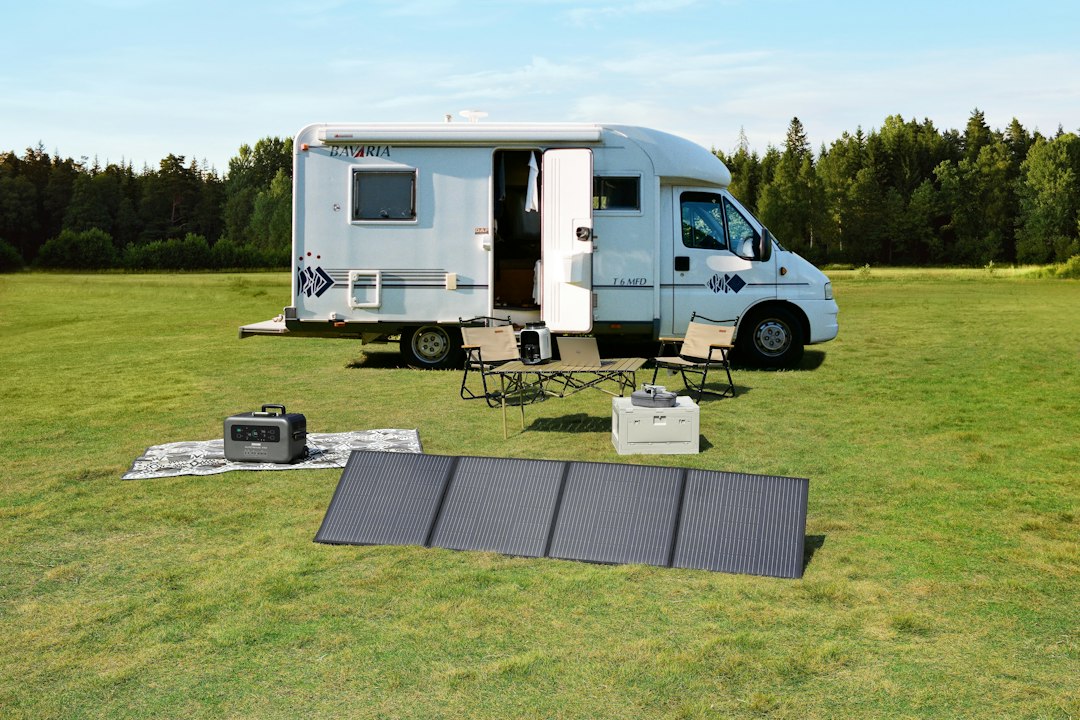
EcoFlow’s flagship tops this list because it comes closest to a 30A campsite pedestal in battery form. Continuous output is rated at 4,000W with an 8,000W surge, and capacity starts at 4,096Wh. Add expansion batteries and the total passes 12kWh, which is more than most travel trailers burn through in a long weekend. A 13,500 BTU roof air conditioner pulls about 1,500W running, so one battery holds it for roughly 2.3 hours at 85 percent inverter efficiency. Swap the air conditioner for a 12V compressor fridge, LED lighting, a laptop and a Starlink dish, and the same battery runs two full days. The EcoFlow product page lists both 120V and 240V output modes, so the unit can also feed a home transfer switch between camping trips.
Noise is where it walks away from a gas generator. EcoFlow rates fan noise under 30 dBA at low load, quieter than the refrigerator in your kitchen. A 2,200W inverter generator sitting outside the same trailer runs 52 to 57 dBA at 23 feet, and it cannot legally run during quiet hours at most Ontario parks. Recharge speed is the second headline number: 0 to 80 percent in about 50 minutes from a 120V wall outlet with the AC charging cable.
Two honest complaints. The unit is heavy, heavy enough that lifting it into a truck bed or a high storage bay is a two-person job. App-first controls also add steps when you just want to press a button and go. Pair it with a standard TT-30 dogbone adapter to feed the trailer’s shore power inlet. Check the EcoFlow DELTA Pro 3 on Amazon.
Key strengths:
- ✅ Headroom that matches a 30A campsite pedestal: 4,000W continuous and 8,000W surge.
- ✅ Expandable capacity from 4,096Wh to more than 12kWh with add-on batteries.
- ✅ Quiet enough for park quiet hours at under 30 dBA under light load.
- ✅ Fast AC recharge, roughly 0 to 80 percent in 50 minutes.
- ✅ Doubles as home backup through a transfer switch between camping seasons.
- ❌ Heavy enough that moving it is a two-person job.
- ❌ The most expensive option here once expansion batteries are added.
- ❌ App-first controls frustrate people who want a simple on button.
Who it’s for: Full-time RVers and boondockers who run air conditioning off-grid and want one battery that also backs up the house.
2. Jackery Explorer 3000 Pro , Best for Running RV Air Conditioning
Jackery built this one for the exact load that trips a 15A campsite breaker. The Explorer 3000 Pro delivers 3,000W continuous and 6,000W surge from a 3,024Wh pack, which is enough headroom to start a 13,500 BTU air conditioner without bolting on a soft-start kit. Run the numbers on paper: at 85 percent efficiency the pack holds about 2,570 usable watt hours, so a 1,500W air conditioner runs for roughly 1.7 hours and a 300W fridge-plus-fan load runs for about 8.5 hours. On a July weekend in Killarney, that is the difference between sleeping comfortably and sleeping in a hot trailer.
Operation is simple by design. Large physical buttons, a clear display and a phone app if you want it. Jackery also sells a matching transfer switch, so the same station can carry a furnace fan and refrigerator at home during a winter outage. Working out your own numbers takes ten minutes with the label on the appliance, and our refrigerator runtime guide walks through the arithmetic step by step.
The catch is recharging. A full AC charge takes about two hours, but 1,400W of solar is an enormous amount of panel to carry and store, and Ontario shoulder-season sun rarely delivers rated output for a full day. There is also no 30A RV outlet on the front panel, so a dogbone adapter is mandatory. Check the Jackery Explorer 3000 Pro on Amazon.
Key strengths:
- ✅ 3,000W continuous and 6,000W surge, enough to start a roof air conditioner.
- ✅ Simple physical controls with a readable display and no mandatory app.
- ✅ About a two-hour AC recharge at this capacity class.
- ✅ A matching transfer switch is available for home backup duty.
- ❌ No 30A RV outlet on the front panel, so a dogbone adapter is required.
- ❌ Reaching 1,400W of solar charging means carrying a large panel array.
- ❌ Close to 64 pounds, which is awkward to move alone.
Who it’s for: Weekend and seasonal campers who want to run a roof air conditioner on battery power without learning a complicated app.
3. BLUETTI AC200L , Best Mid-Range Value
The AC200L is the value pick because it puts a dedicated 30A RV outlet on the front panel at a fraction of flagship capacity. Output is 2,400W continuous with 3,600W of surge in Power Lifting mode, and the LiFePO4 pack holds 2,048Wh. That works out to roughly 1,740 usable watt hours at 85 percent efficiency. A 900W induction cooktop runs for about 1.9 hours on a single charge, and a 60W CPAP machine runs close to 29 nights. For a trailer with a 30A shore inlet, no dogbone adapter is needed, which removes one more part to lose in a storage bin.
Charging is quick for the class. BLUETTI rates 0 to 80 percent in about 45 minutes from a wall outlet, and the unit accepts a folding solar array directly with no separate charge controller. Fans are audible at full output, roughly in the 50 dBA range, but that still sits well below any gas generator and the noise fades as the load drops.
Two limits matter. There is no 240V output, so this is not a home backup unit in the way the DELTA Pro 3 is. Capacity also fills up fast once an air conditioner is running, and each expansion battery adds significant cost. Check the BLUETTI AC200L on Amazon.
Key strengths:
- ✅ Dedicated 30A RV outlet built into the front panel.
- ✅ 2,400W continuous with 3,600W of surge in Power Lifting mode.
- ✅ Fast recharge, about 0 to 80 percent in 45 minutes on AC.
- ✅ LiFePO4 cells with a long cycle life and good cold-weather behaviour.
- ❌ No 240V output, so it cannot feed a home transfer switch the way larger units can.
- ❌ 2,048Wh drains quickly with an air conditioner running.
- ❌ Fan noise is noticeable at full output.
Who it’s for: Trailer owners who want a genuine 30A RV outlet and fast charging without paying flagship prices.
4. Anker SOLIX F2600 , Best for High-Surge Loads
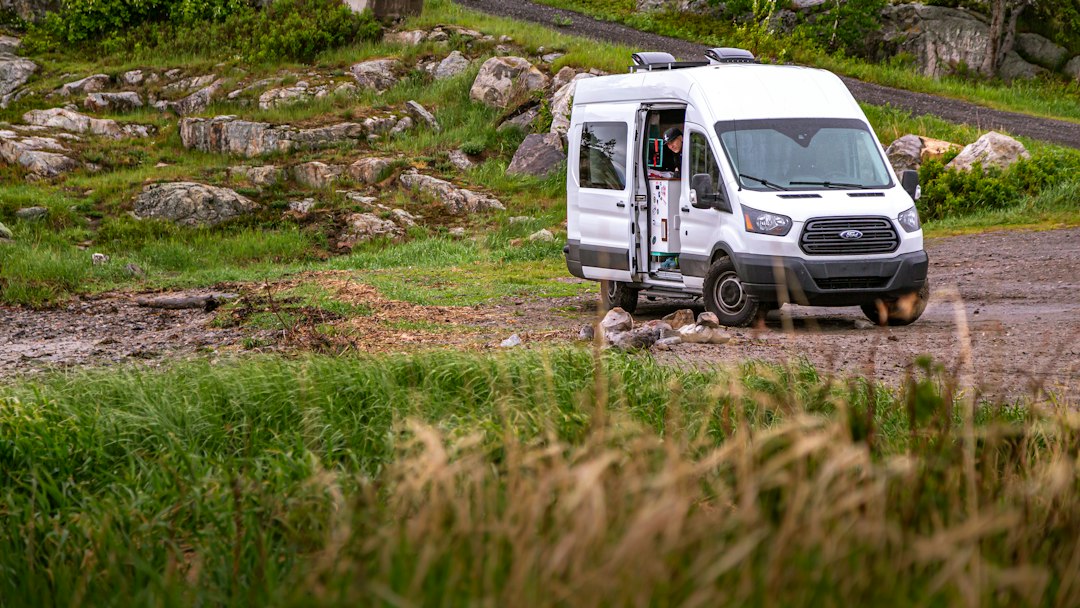
Anker’s SOLIX F2600 targets trailers that draw hard for short bursts. The rating is 2,400W continuous and 3,600W surge from a 2,560Wh LiFePO4 pack, and the front panel includes an RV-style 30A outlet plus USB-C ports rated at 100W and 140W. Surge headroom is the selling point for anyone running a coffee maker, a hair dryer or a microwave alongside the fridge. Anker also rates AC recharge at roughly 1.5 hours, which is quicker than most competitors at this capacity.
Weight lands just under 70 pounds, so it wants a permanent home in the trailer rather than a spot on the picnic table. Build quality is the strongest part of the package: steel-reinforced corners, a proper carry handle and a five-year warranty that matches the better units in this comparison. For a couple who mostly stays on electrical sites and wants insurance against a tripped pedestal breaker, that combination is hard to argue with.
The compromises are capacity and solar. At 2,560Wh it sits between the budget and flagship tiers, so an air conditioner on a hot afternoon will drain it in under two hours. Solar input is also lower than the EcoFlow and Jackery flagships, which matters if you camp off-grid for more than two nights at a time.
Key strengths:
- ✅ 3,600W surge from a 2,400W continuous rating handles motor starts.
- ✅ RV-style 30A outlet plus 100W and 140W USB-C ports on the panel.
- ✅ AC recharge in about 1.5 hours, among the fastest in this class.
- ✅ Steel-reinforced build with a five-year warranty.
- ❌ Just under 70 pounds, so it stays where you put it.
- ❌ 2,560Wh is mid-tier capacity for the asking price.
- ❌ Solar input is lower than the EcoFlow and Jackery flagships.
Who it’s for: RV owners who run high-surge appliances in short bursts and want a rugged station that can also sit in a garage for home backup.
5. Goal Zero Yeti 1500X , Best Compact Solar-First Setup
The Yeti 1500X is the light option in this group. At roughly 44 pounds it is the only station here that one person can move from a truck bed to a dinette without help, and the 1,516Wh pack still delivers 2,000W continuous and 3,500W surge. That surge rating will start a 13,500 BTU air conditioner if you fit a soft-start kit to the unit. Without the kit, expect the overload light and a shutdown. Honest numbers: 1,516Wh is about 1,290 usable watt hours, so a 60W fridge load runs roughly 21 hours and a 500W load runs about 2.5 hours.
Where the Yeti earns its place is solar. Goal Zero’s MPPT charging and the Yeti Link expansion system suit campers who want to build capacity over a few seasons rather than buy it all at once. A 300W folding panel refills the pack in roughly six hours of good summer sun, which fits a typical park day. Our solar panel guide for camping covers which folding arrays pair well with packs at this size, and the solar generator comparison explains how MPPT charging differs between brands.
Caveats are straightforward. This is a smaller pack, so it will not run a trailer’s air conditioning through a warm night. DC car charging is slow, and the included wall charger is not the fastest way to top up between trips.
Key strengths:
- ✅ About 44 pounds, the lightest unit in this comparison.
- ✅ 2,000W continuous and 3,500W surge from a 1,516Wh pack.
- ✅ MPPT solar charging that pairs well with a 300W folding panel.
- ✅ Expandable over time through the Yeti Link system.
- ❌ Needs a soft-start kit to run a 13,500 BTU air conditioner.
- ❌ Smaller pack, so overnight air conditioning is out of reach.
- ❌ Slow DC charging from a vehicle 12V outlet.
Who it’s for: Solo travellers and small-trailer owners who prioritize low weight and quiet solar charging over raw capacity.
Frequently Asked Questions
How many watts do I need to run an RV air conditioner?
A 13,500 BTU roof unit draws about 1,500W running and can spike past 3,000W on compressor startup. Look for a station rated at 2,000W continuous and 3,500W surge or better, or fit a soft-start kit to cut the startup spike.
Can I run a power station inside an RV?
Yes. Battery stations produce no exhaust, so they can sit on the dinette or floor while running. Keep the vents and fans clear, and never run a gas generator inside a trailer or under an attached awning.
How long will a 2,000Wh station run a 12V RV fridge?
A modern 12V compressor fridge averages 40 to 60W once it is cold. At 85 percent inverter efficiency, 2,048Wh works out to roughly 29 to 43 hours, depending on ambient temperature and how often the door opens.
Do I need an electrician to connect a power station to my RV?
Not for plugging into the existing shore power inlet with an adapter. Any hardwired transfer switch, new outlet or panel work falls under Ontario electrical rules, and the Electrical Safety Authority expects a licensed electrician to do it.
Will a power station charge while I drive?
Most units accept 100W to 200W through a 12V car port, so a four-hour drive adds a few hundred watt hours. A dedicated DC-to-DC charger feeds more power, but it needs proper wiring and a fuse.
Are solar panels worth adding for Ontario camping?
Yes, if you camp off-grid. A 300W to 400W folding array refills a mid-size station in one decent summer day. Expect noticeably less in May and late September when the sun sits lower in the sky.
What Should You Remember?
- Match surge, not just running watts. A 13,500 BTU air conditioner needs 2,000W continuous and 3,500W surge or better.
- Plan for 85 percent efficiency. A 2,000Wh pack delivers roughly 1,700 usable watt hours under a steady load.
- Weight decides placement. Units above 60 pounds stay in the trailer, while lighter packs move to the picnic table.
- Quiet hours favor batteries. No gas generator can legally run overnight in most Ontario parks.
- Check the outlet type. A built-in 30A RV port removes the need for a dogbone adapter at the shore inlet.
- Battery stations make no carbon monoxide. That is why they are safe inside a trailer, unlike a gasoline generator.
- Bring solar if you boondock. A 300W folding array refills a mid-size pack in one summer day.
This article is for general information only. Always follow manufacturer instructions, local electrical codes, and hire a licensed electrician for transfer switches and standby generator installation. Carbon monoxide is deadly , never run a generator indoors.