Last Updated: April 2026
Solar panel costs have fallen more than 90% since 2010, making residential solar one of the most compelling home investments available today. In 2026, the average American homeowner can install solar for under $3 per watt before incentives — and under $2.10 per watt after the federal Investment Tax Credit. This page compiles the most current and comprehensive statistics on solar panel pricing, system costs by size, return on investment, payback periods, and regional cost variation — sourced from the National Renewable Energy Laboratory, Lawrence Berkeley National Laboratory, and the Solar Energy Industries Association.
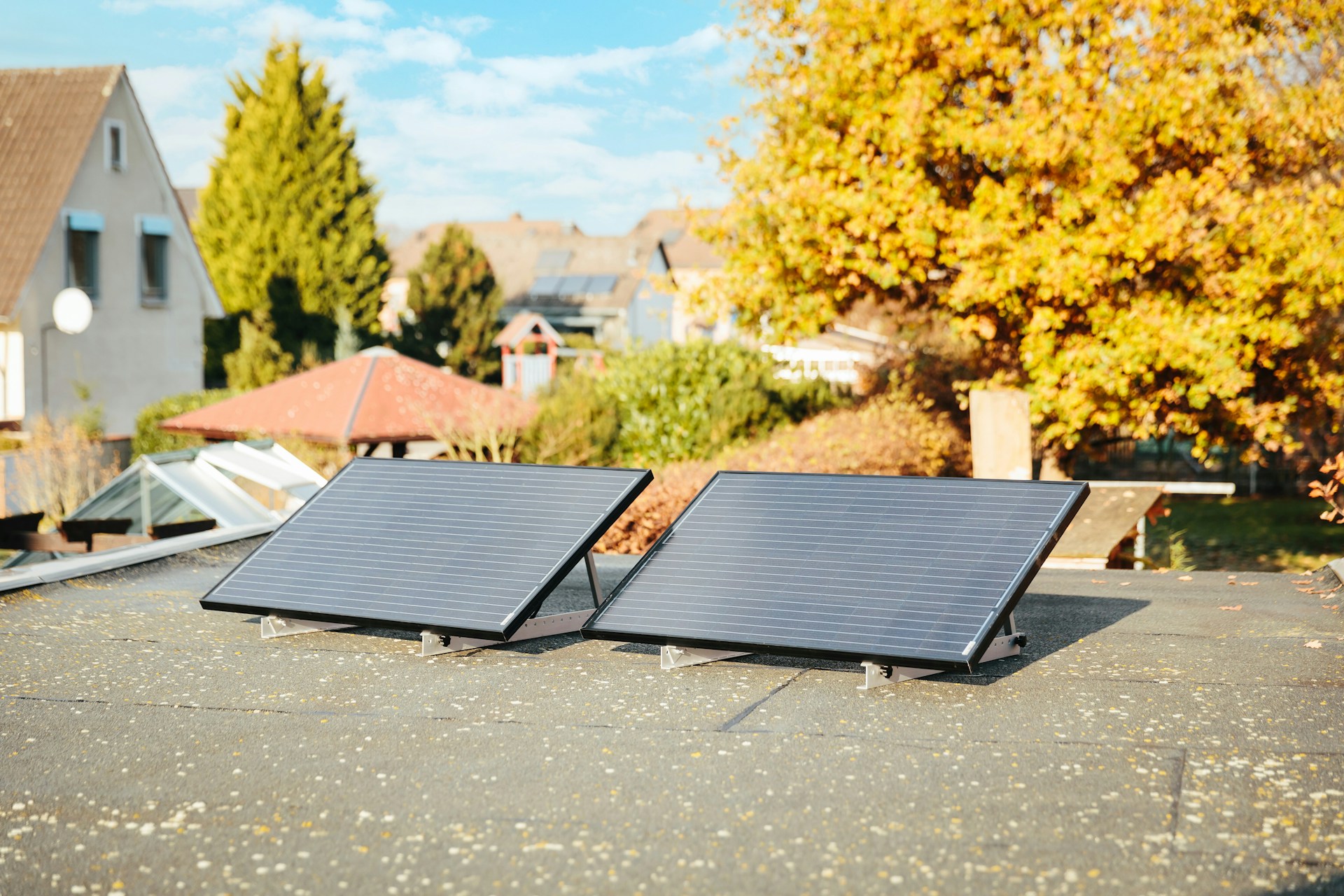
Key Stat: The median installed cost of residential solar in the U.S. fell to $2.95/W in 2024 — a 64% reduction from the $8.50/W median recorded in 2010.
— Lawrence Berkeley National Laboratory Tracking the Sun, 2025
Price Per Watt
$2.95/W
Median all-in installed cost per watt for residential solar in the U.S. in 2024 (before incentives)
— Lawrence Berkeley National Laboratory Tracking the Sun, 2025
$2.07/W
Effective cost per watt after applying the 30% federal Investment Tax Credit
— Lawrence Berkeley National Laboratory, 2025
$0.89/W
Module-only (panel hardware) cost — representing just ~30% of the total installed system price
— NREL Residential Solar Cost Benchmark Q4 2024, 2025
$2.06/W
Non-module (soft costs + labor + inverter) cost component — now the majority of total price
— NREL, 2025
$0.30/W
Approximate inverter cost component (string or micro) as part of total residential system price
— NREL Cost Benchmark, 2025
$0.30/W
Electrical balance-of-system (wiring, conduit, mounting hardware) cost per watt
— NREL, 2025
Total System Cost by Size
$8,850
Estimated installed cost of a 3 kW system before incentives — appropriate for a small home or partial offset
— NREL, 2025
$14,750
Estimated installed cost of a 5 kW system before incentives — covers about 50–60% of average U.S. home electricity use
— NREL, 2025
$23,600
Estimated installed cost of an 8 kW system before incentives — typical for a full-home offset in moderate-sun regions
— NREL, 2025
$29,500
Estimated installed cost of a 10 kW system before incentives — suitable for high-use homes or EV charging addition
— NREL, 2025
$16,520
Net cost of a typical 8 kW system after the 30% federal ITC ($7,080 credit) — the most common scenario for a new residential installation
— NREL, 2025
Cost Breakdown
30%
Hardware (panels, inverter, mounting) as a share of total installed residential solar price in 2024
— NREL, 2025
15%
Installation labor as a share of total system cost
— NREL, 2025
20%
Sales and marketing (customer acquisition cost) as a share of total system price — a leading soft-cost target for reduction
— Lawrence Berkeley National Laboratory, 2025
10%
Permitting, inspection, and interconnection fees as a share of total system cost
— NREL, 2025
Cost by State
$2.10/W
Lowest state average installed cost: Arizona — driven by streamlined permitting, high competition, and high volume
— Lawrence Berkeley National Laboratory, 2025
$2.30/W
California average — surprisingly competitive given market maturity and high labor costs
— Lawrence Berkeley National Laboratory, 2025
$3.50/W
Midwest/Northeast average — higher labor costs, more complex permitting, lower installer density
— Lawrence Berkeley National Laboratory, 2025
$4.20/W
Highest state average: Connecticut — complex utility interconnection rules, high labor costs, low market volume
— Lawrence Berkeley National Laboratory, 2025
Historical Cost Trends
$8.50/W
Average residential solar installed cost in 2010 — the starting point of the modern solar cost decline
— Lawrence Berkeley National Laboratory, 2024
$5.00/W
Average installed cost in 2015 — 41% reduction from 2010 in 5 years
— Lawrence Berkeley National Laboratory, 2024
$3.80/W
Average installed cost in 2019 — another 24% decline from 2015
— Lawrence Berkeley National Laboratory, 2024
64%
Total decline in residential solar installed cost from 2010 to 2024 — from $8.50/W to $2.95/W
— Lawrence Berkeley National Laboratory, 2025
ROI & Payback Period
7–9 yrs
Average payback period for a purchased solar system in the U.S. after ITC (2024)
— NREL, 2025
4–6 yrs
Fastest payback periods — achieved in Hawaii and California, where electricity rates exceed $0.30/kWh
— NREL, 2025
10–14 yrs
Longest payback periods — in states with low electricity rates under $0.10/kWh (e.g., Louisiana, Oklahoma)
— NREL, 2025
10–12%
Typical internal rate of return (IRR) for a purchased residential solar system at today's costs and electricity rates
— NREL Solar Economics Analysis, 2025
$25,000–$35,000
Estimated lifetime net savings from a typical residential solar system over 25 years, after system cost
— Lawrence Berkeley National Laboratory, 2025
4.1%
Median home value premium for homes with owned solar panels, translating to approximately $15,000 on a median-priced U.S. home
— Lawrence Berkeley National Laboratory "Selling Into the Sun", 2024
Incentives That Reduce Cost
30%
Federal Investment Tax Credit (ITC) — the single largest cost reduction tool, available through 2032
— IRS / U.S. DOE, 2024
$4,430
Average federal ITC credit dollar value for a typical residential solar installation in 2024
— NREL, 2025
$1,000–$5,000
Typical range of additional state rebate programs available in 12 states, stacked on top of the federal ITC
— DSIRE Database, 2025
26%
Average effective cost reduction from net metering over a 25-year system life in states with favorable net metering policies
— NREL, 2025
Frequently Asked Questions
What is the average cost of solar panels in 2026?
The median installed cost of residential solar in the U.S. is approximately $2.95 per watt in 2024, according to Lawrence Berkeley National Laboratory. For a typical 8 kW system, that's about $23,600 before incentives. After the 30% federal Investment Tax Credit, the net cost drops to approximately $16,520. State rebates and net metering can reduce the effective cost further.
How much does a solar panel system cost for an average home?
For an average U.S. home using approximately 10,500 kWh per year, an 8 kW system is typically sufficient. Before incentives, expect to pay approximately $23,600. After the 30% federal ITC, the net cost is around $16,520. In high-sun states like Arizona or New Mexico, a smaller 6–7 kW system may suffice, reducing total cost to $12,000–$15,000 after ITC.
How long does solar pay for itself?
The average payback period for a purchased residential solar system is 7–9 years after the federal ITC, according to NREL. In high-electricity-rate states (Hawaii, California, Massachusetts), payback can be as short as 4–6 years. In low-electricity-rate states (Louisiana, Oklahoma), payback periods can reach 10–14 years.
How much have solar panel costs dropped?
Solar panel installed costs have fallen 64% since 2010, from approximately $8.50/W to $2.95/W in 2024. Panel hardware costs (module-only) have fallen even faster — over 90% since 2010 — from roughly $3.50/W for modules in 2010 to just $0.89/W today. The majority of current system cost is now in "soft costs" like labor, permitting, and customer acquisition.
Does solar add value to a home?
Yes, for owned systems. Lawrence Berkeley National Laboratory's research found that homes with owned solar systems sell for a median premium of 4.1% — approximately $15,000 on a median-priced U.S. home. This adds to the financial return of solar beyond just electricity savings. Leased systems typically don't command the same premium and can complicate the home sale process.
Cite This Page
EmergencyEnergy.co. "Solar Panel Cost Statistics 2026: Average Price Per Watt, ROI & Payback Period."
Updated April 2026. https://emergencyenergy.co/stats/solar-panel-cost-statistics-2026.html