
⚡ Quick Answer
For most Ontario homeowners: A dual-fuel portable generator ($400–$800) paired with a manual transfer switch ($300–$600 installed) covers 95% of outage scenarios at the lowest cost. If you want automatic coverage and budget allows, a Generac standby generator ($5,000–$8,000 installed) is the most convenient long-term solution. If ice storms take your power for 6+ hours regularly, an EcoFlow Delta Pro or Jackery 2000 Pro portable power station ($1,500–$1,800) is a clean, quiet option for essential loads. Most Ontario homeowners need more than they think — rural Renfrew County and Eastern Ontario customers average 5–15 outages per year.
Ontario has a grid problem. The infrastructure is aging, the weather is getting more extreme, and the province regularly lands near the bottom of national rankings for outage frequency and duration. Hydro One alone reported over 1.5 million customer-hours of outage time in 2023. If you're in a rural area — Renfrew County, Grey-Bruce, Eastern Ontario — your personal outage count is often 2–3x the provincial average.
This guide is built for Ontario homeowners specifically: it covers the backup power options that work in our climate, meet Canadian safety codes, and account for the products actually available at Canadian prices. We've linked to where you can get real pricing, not just US-only Amazon listings.
Before reading: if you want to calculate exactly how much power you need, use our backup power calculator. It'll tell you what wattage you need before you spend anything.
Why Ontario Homeowners Need Backup Power
The case isn't abstract — it's statistical. Here's what Ontario homeowners actually face:
- Ontario ice storms: The 2013 Toronto Ice Storm left 300,000 homes without power for up to 2 weeks. The 2022 Derecho left 1 million customers without power across Ontario and Quebec.
- Average outage frequency: Ontario Hydro One customers average 1.5–2 sustained outages per year at the utility reporting level. Including smaller local distribution company outages and weather events, most Ontario homes experience 5–12 power interruptions annually.
- Rural penalty: If you're in Renfrew County, Hastings County, Frontenac, or Grey-Bruce, multiply the above numbers by 2–3x. Rural distribution lines are longer, older, and more exposed to weather.
- Medical dependency: If anyone in your home relies on powered medical equipment (CPAP, oxygen concentrators, dialysis), backup power isn't optional — it's a safety requirement.
- Well water: Rural homeowners on well water lose water access when the power goes out. Generators aren't just about lights — they're about sanitation. See our detailed guide to powering well pumps during outages.
The financial case is also straightforward: a 3-day outage in winter with a refrigerator full of food ($300–$500 in spoilage) plus the cost of a hotel or alternative heating covers the cost of a mid-range generator. Most Ontario homeowners who've been through one serious ice storm buy backup power before the next winter.
The 5 Types of Backup Power Solutions
1. Portable Generators
Cost: $400–$2,500 | Run time: 8–18 hours per tank | Setup: Manual (need to start, connect, add fuel)
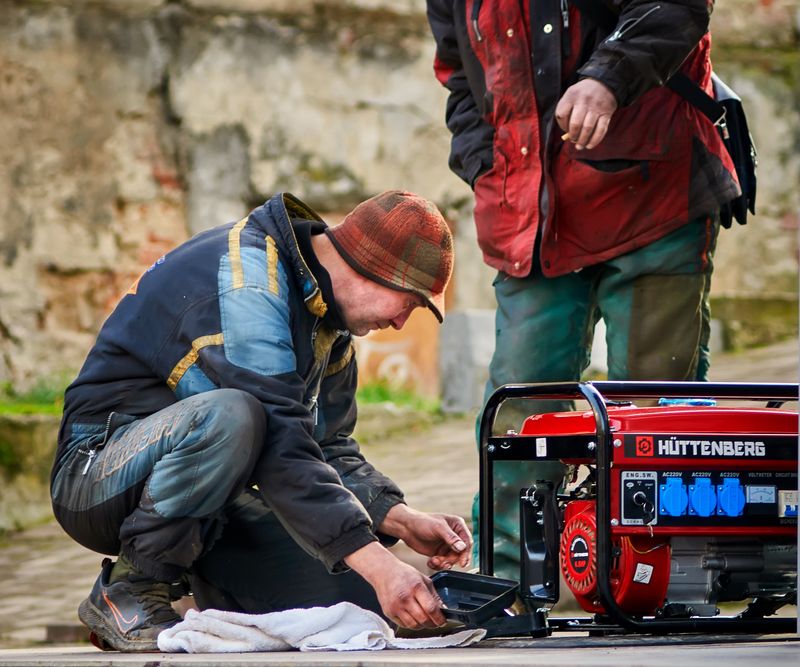
Portable generators are the most affordable and flexible backup power option. They run on gasoline, propane, or both (dual-fuel models). The limitation is that they require manual setup — you need to start them, run extension cords or connect to a transfer switch, and refuel. In an ice storm at 2am, this is not ideal. But for occasional outages, they're by far the most cost-effective solution.
2. Standby Generators
Cost: $5,000–$15,000+ installed | Run time: Days to weeks (connected to natural gas/propane) | Setup: Automatic — starts within 30 seconds of outage
Standby generators are permanently installed, connected to your natural gas or propane line, and start automatically when power fails. You don't need to do anything — by the time you notice the lights went out, the generator has already started and power has been restored to your home. This is the most convenient option and the best choice for medical equipment, families with young children, or homeowners who are frequently away.
3. Portable Power Stations
Cost: $800–$2,500 | Run time: 4–24 hours (depends on load) | Setup: Instant — plug devices in directly
Portable power stations (EcoFlow, Jackery, Bluetti) are large lithium battery banks with AC outlets, USB ports, and DC outputs. No fuel, no exhaust, no noise. You charge them from the wall during normal times and use them during outages. They're not capable of whole-house backup — the capacity isn't there — but they handle essential loads (lights, phone charging, CPAP, small appliances) very effectively.
4. Home Battery Backup
Cost: $10,000–$20,000+ installed | Run time: 8–24 hours for whole home | Setup: Automatic — seamless transfer
Whole-home battery backup systems (Tesla Powerwall, Enphase IQ Battery) are permanently installed, automatically transfer power during outages, and provide silent, clean energy. They're most cost-effective when combined with solar panels, which recharge the battery during the day. Without solar, they're expensive for the runtime they provide.
5. Solar + Battery Systems
Cost: $20,000–$50,000+ installed | Run time: Indefinite during sunny periods | Setup: Automatic
A solar panel array combined with battery storage is the most resilient long-term solution. During normal times, it reduces your electricity bill. During outages, it provides continuous power as long as the sun is shining. The economic case depends on your electricity rates, sun exposure, and available incentives. Ontario's Net Metering program allows you to sell excess generation back to the grid.
Top Product Picks by Category
Best Portable Generators
🏆 Best Value: Champion 3500W Dual Fuel (~$500 CAD)
3,500W running / 4,375W surge — Runs on gasoline or propane. At this price point, the Champion 3500W dual-fuel is the most popular choice for Ontario homeowners who want real backup capacity without spending $1,500+. Propane compatibility is important in Ontario winters — gasoline in cold weather can be problematic, and propane stores indefinitely without stabilizer.
Best for: Essential circuit backup (fridge, lights, furnace blower, phone charging). Sufficient for most homes' critical loads.
Check Price →⭐ Premium Portable: Honda EU2200i (~$1,400 CAD)
2,200W surge / 1,800W running — Honda inverter technology means clean, stable power safe for sensitive electronics (CPAP machines, medical equipment, computers). Significantly quieter than conventional generators — runs at 48–57 dB, about the level of a normal conversation. The industry benchmark for quality and reliability in portable generators.
Best for: Homes with sensitive electronics, medical equipment, or noise concerns. Also excellent for camping and RV use when not deployed for home backup.
Check Price →Best Standby Generators
🏆 Best Standby: Generac 22kW Air-Cooled (~$5,000–$8,000 CAD installed)
22,000W — The most popular home standby generator in North America. Powers an entire home including well pump, electric range, A/C, and all standard appliances simultaneously. Air-cooled models (vs liquid-cooled) are more affordable and sufficient for most residential applications. Generac is the most widely supported brand in Ontario — easier to find licensed installers and service technicians.
Installation note: Requires a licensed electrician, ESA permit, and connection to natural gas or propane supply. Budget $1,500–$3,000 for installation on top of equipment cost.
Get a Quote →Best Portable Power Stations
🏆 Best Overall: EcoFlow Delta Pro (~$1,800 USD / ~$2,400 CAD)
3,600Wh capacity / 3,600W AC output — The Delta Pro is one of the few portable power stations with enough capacity and output to run a refrigerator, lights, and appliances simultaneously for 8–12+ hours. The expandable battery design means you can add extra batteries for longer runtime. Fast charging (0→100% in 1.8 hours) means you can top it up during a brief grid restoration window.
Best for: Homeowners who want a quiet, no-exhaust option for essential loads, especially in municipalities where generator noise complaints are a concern.
Check Price →💰 Strong Value: Jackery Explorer 2000 Pro (~$1,500 USD / ~$2,000 CAD)
2,160Wh capacity / 2,200W AC output — The Explorer 2000 Pro is slightly smaller than the Delta Pro but well-priced for its capacity. Handles refrigerators, lights, CPAP, and phone charging comfortably. Quieter and more portable than the Delta Pro. Solar-chargeable (6x SolarSaga 200W panels = 1,200W solar input).
Best for: Families who want essential-circuit backup without dealing with generators, or as a first backup power purchase before deciding on a larger system.
Check Price →Best Home Battery Systems
🏆 Best Whole-Home Battery: Tesla Powerwall 3 (~$15,000 CAD installed)
13.5kWh capacity / 11.5kW continuous output — The Powerwall 3 is Tesla's most capable home battery, now with integrated solar inverter. It covers most homes' whole-house load for 8–12 hours and recharges via solar panels if available. Seamless automatic transfer means you won't notice when the grid goes out. Ontario Tesla-certified installers available in Ottawa, Toronto, and major cities.
Best for: Homeowners with solar panels or planning to add solar, or those who want the most seamless, lowest-maintenance backup power solution regardless of cost.
Get a Quote →💡 Solar-Compatible: Bluetti AC200P (~$1,000 USD / ~$1,350 CAD)
2,000Wh capacity / 2,000W AC output — The Bluetti AC200P is a mid-tier portable power station with excellent solar input capacity (700W max). If you have or plan to add solar panels, it can recharge during the day and provide essential load backup overnight. Good value at the $1,000 price point for the capacity and solar capability.
Best for: Homeowners interested in solar-supplemented backup power at a lower entry price than whole-home battery systems.
Check Price →Quick Comparison Table
| Type | Cost (CAD) | Capacity | Runtime | Setup | Best For |
|---|---|---|---|---|---|
| Portable Generator | $400–$2,500 | 2,000–10,000W | 8–18h/tank | Manual | Essential circuits, budget-first |
| Standby Generator | $6,000–$15,000+ | 7,000–22,000W | Days–weeks | Automatic | Whole-home, medical, frequent outages |
| Portable Power Station | $800–$2,500 | 1,000–3,600Wh | 4–24h | Instant | Essential loads, no-exhaust option |
| Home Battery | $12,000–$20,000+ | 10–40kWh | 8–24h | Automatic | Whole-home, seamless coverage |
| Solar + Battery | $20,000–$50,000+ | 10–40kWh+ | Indefinite | Automatic | Long-term energy independence |
How to Choose the Right Backup Power for Your Home
Answer these four questions to narrow the field quickly:
- How often do you lose power? If it's 1–2 times per year for a few hours, a portable generator or power station is sufficient. If it's 5–10+ times per year or for days at a time, the convenience of a standby generator or home battery justifies the cost.
- What loads do you need to cover? Just essentials (fridge, lights, phone charging) → portable power station or small generator. Essential + furnace + well pump → 5,000–7,500W generator. Whole home including A/C, electric range → standby generator or home battery. Use our power needs calculator to add up your specific loads.
- Is automatic startup important? If anyone in your home has medical equipment or you're frequently away from home, automatic startup (standby generator or home battery) is important. If you're always home and don't mind manually starting equipment, portable options are fine.
- What's your budget? Under $1,000 → portable generator. $1,000–$2,500 → portable power station or premium portable generator. $5,000–$10,000 → standby generator. $15,000+ → home battery system.
For a head-to-head breakdown between generators and battery options, see our generator vs battery comparison guide.
Installation and Safety in Ontario
Ontario has specific requirements for backup power installation that differ from other provinces and from US guidance:
ESA Requirements (Electrical Safety Authority)
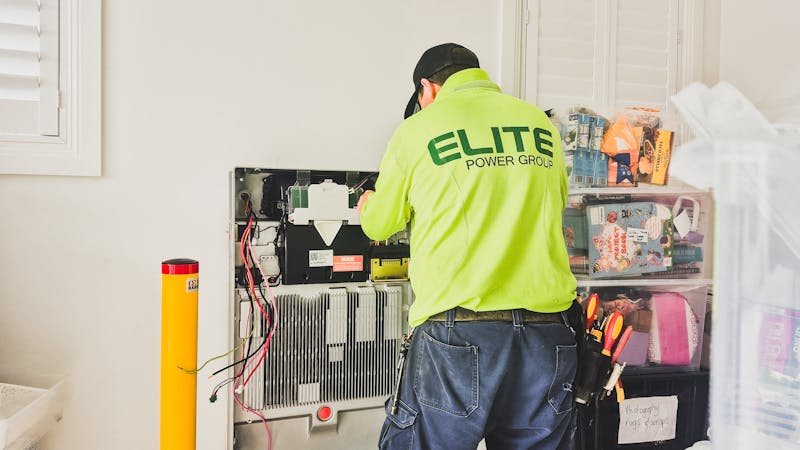
- Transfer switches: Any connection between a generator and your home's electrical panel requires a licensed electrician and an ESA permit. This includes both manual transfer switches and automatic transfer switches.
- Standby generators: Full ESA permit and inspection required. This is non-negotiable — backfeeding the utility grid is illegal and can electrocute utility workers.
- Generator interlock kits: These require the same ESA permit and licensed electrician as a full transfer switch.
- Portable power stations: If you're just plugging devices directly into the power station, no permit is required. ESA rules apply when connecting to your home's wiring.
Carbon Monoxide Safety
- Ontario fire codes require generators to operate at least 3 metres from any window, door, or vent.
- Never run a generator in a garage, even with the door open — CO can still enter the home.
- CO detectors are mandatory in Ontario homes and should be tested before every season.
- Portable power stations (battery-based) produce zero emissions and are safe for indoor use.
Fuel Storage
- Gasoline: maximum 30 litres per container, stored in approved containers in a detached structure away from the home.
- Propane: cylinders must be stored upright, outdoors, and away from ignition sources.
- Add fuel stabilizer to gasoline stored for more than 30 days.
For authoritative guidance on backup power systems and emergency preparedness, see the U.S. Department of Energy, the EPA, Ready.gov, and the National Renewable Energy Laboratory (NREL) — all offer resources applicable to Canadian homeowners planning energy resilience.
Recommended Products
Frequently Asked Questions
Related Resources
- Emergency preparedness guides and survival tips Power is one piece — see the full preparedness picture.
Q: What size generator does an Ontario home actually need?
A: For essential circuits (fridge, furnace, lights, select outlets): 5,000–7,500W. For whole-house coverage including central A/C: 14,000–22,000W. For well pump coverage: add 2,000–3,500W to your baseline. Most Ontario homeowners run comfortably on 7,500W for essential circuits. The power calculator gives you a precise number based on your specific appliances.
Q: Is a portable power station good enough for an Ontario winter outage?
A: For short outages (4–8 hours), yes — a 2,000Wh+ power station handles fridge, lights, phone charging, and CPAP comfortably. For multi-day winter outages where you need to run a furnace (typically 600–1,500W for the blower), a generator is the more practical choice. The physics limit portable power stations: even a $2,000 unit depletes in 4–6 hours if running a furnace continuously.
Q: Does Hydro One cover equipment damage from power outages?
A: Generally no. Hydro One and most Ontario utilities disclaim liability for equipment damage caused by outages. Your home insurance may cover equipment damage from power surge events (check your policy). Standby generators with automatic voltage regulation, or portable power stations (which are inherently clean power), protect sensitive electronics better than direct generator output.
Q: Do I need a permit for a portable generator in Ontario?
A: Not for the generator itself. But if you're connecting it to your home's electrical panel (via a transfer switch or interlock), you need an ESA permit and a licensed electrician. If you're just running extension cords from the generator to appliances, no permit is required.
Q: Can I run my well pump off a portable power station?
A: Most portable power stations cannot handle well pump starting surge (1,500–3,500W surge for 1–2 seconds). The EcoFlow Delta Pro (3,600W AC output, 7,200W X-Boost surge) is one of the few that can. Standard portable power stations (1,000–2,200W output) will trip on well pump startup. A generator is the more reliable choice for well pump backup. See our complete well pump backup guide.
Q: Are standby generators worth it in Ontario?
A: If you're in a rural area with frequent outages, work from home, have medical equipment, or are frequently away from home — yes. The $6,000–$8,000 cost of a Generac 22kW installed is a one-time expense for 20+ years of automatic outage coverage. If you're in urban Toronto or Ottawa and experience 1–2 short outages per year, a portable generator or power station is more cost-effective.
For a complete outage preparedness plan covering food safety, water storage, emergency kits, and communication plans, read our Ontario Power Outage Preparedness Guide.
Disclosure: This article contains affiliate links. We may earn a commission if you purchase through our links, at no extra cost to you. We only recommend products we believe are genuinely good options for Ontario homeowners.