Last Updated: April 2026
Residential solar has moved from niche to mainstream across the United States. More than 6 million homes now generate their own electricity from rooftop panels, with installations accelerating each year as hardware costs fall and grid reliability concerns mount. This page compiles the most current statistics on residential solar installations, costs, adoption rates by state, and market projections — all sourced from federal agencies, national laboratories, and leading industry research organizations.
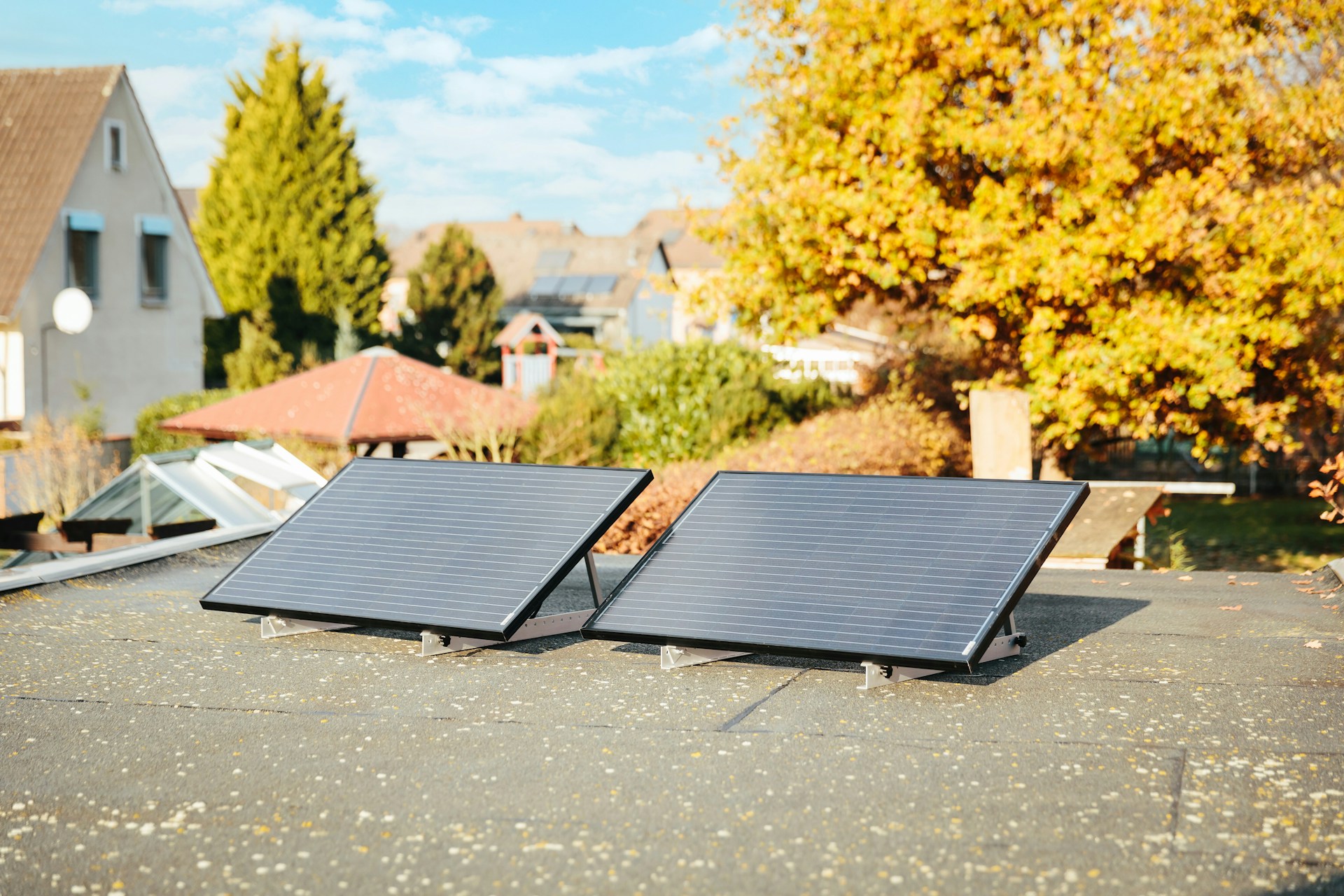
Key Stat: The U.S. residential solar market added over 8 gigawatts of new capacity in 2024 — enough to power approximately 1.6 million average American homes for a full year.
— SEIA, 2025
Market Size & Growth
6.2M+
U.S. homes with rooftop solar installed as of end-2024
— SEIA / Wood Mackenzie, 2025
8.1 GW
Residential solar capacity added in 2024 — a record annual figure
— SEIA U.S. Solar Market Insight, 2025
52 GW
Total cumulative U.S. residential solar capacity installed through 2024
— EIA Electric Power Monthly, 2025
22%
Year-over-year growth in residential solar installations from 2023 to 2024
— Wood Mackenzie Solar Pulse, 2025
1 in 10
Approximate share of owner-occupied single-family homes in the U.S. that have rooftop solar — the highest proportion in history
— Lawrence Berkeley National Laboratory Tracking the Sun, 2025
~$16B
Estimated annual residential solar installation market revenue in the U.S. in 2024
— BloombergNEF U.S. Solar Market, 2025
400,000+
New residential solar systems installed in the U.S. in 2024 alone
— SEIA, 2025
Installation Costs
$2.95/W
Median installed cost per watt for residential solar in the U.S. in 2024 (before incentives)
— Lawrence Berkeley National Laboratory Tracking the Sun, 2025
$2.06/W
Median installed cost per watt after applying the 30% federal Investment Tax Credit (ITC)
— Lawrence Berkeley National Laboratory, 2025
$14,760
Average total installed cost for a 5 kW residential system (before incentives)
— NREL Residential Solar Cost Benchmark, 2025
64%
Decline in residential solar hardware costs since 2010
— NREL, 2025
$0.89/W
Module-only cost for residential solar panels — the lowest-ever recorded in NREL benchmarks
— NREL Q4 2024 Solar Cost Benchmark, 2025
$2.55/W
Soft costs (labor, permitting, customer acquisition, installation overhead) as a share of total installed cost — now representing the majority of system price
— NREL, 2025
40–60%
Share of total residential solar price that is now "soft costs" (non-hardware), highlighting the next major cost reduction frontier
— Lawrence Berkeley National Laboratory, 2025
Adoption by State
1.7M
Residential solar installations in California — the most of any U.S. state
— SEIA State Solar Spotlight, 2025
31%
Share of new U.S. residential solar capacity added by California in 2024
— SEIA, 2025
Hawaii
State with the highest residential solar penetration rate — approximately 27% of homes have rooftop solar
— EIA State Energy Data System, 2025
Texas
Fastest-growing residential solar market in 2024, driven by grid reliability concerns post-Winter Storm Uri
— Wood Mackenzie, 2025
Top 5 States
California, Texas, Florida, Arizona, and New Jersey accounted for over 58% of all residential solar installed in 2024
— SEIA, 2025
$2.10/W
Lowest state-average installed cost (Arizona) — driven by favorable permitting and high installer competition
— Lawrence Berkeley National Laboratory, 2025
$4.20/W
Highest state-average installed cost (Connecticut) — reflecting complex permitting, high labor costs, and utility interconnection delays
— Lawrence Berkeley National Laboratory, 2025
8.5 kW
Average size of newly installed residential solar system in 2024 — up from 6.2 kW in 2019
— Lawrence Berkeley National Laboratory Tracking the Sun, 2025
22–24%
Efficiency range of premium residential monocrystalline solar panels available in 2025
— NREL Best Research-Cell Efficiency Chart, 2025
0.5%/yr
Typical annual panel degradation rate — meaning a system loses roughly half a percent of output each year
— NREL Solar Degradation Rate Study, 2024
25–30 yrs
Typical manufacturer warranty period for modern residential solar panels
— SEIA, 2024
10,500 kWh/yr
Average annual electricity generation from an 8 kW residential solar system in the U.S. Sun Belt (based on 1,300+ peak sun hours)
— NREL PVWatts Calculator, 2025
80%
Minimum power output guaranteed at 25 years under standard residential panel warranties
— SEIA Industry Standards Report, 2024
Financial Returns & Payback
7–9 yrs
Average payback period for a residential solar system in the U.S. after ITC in 2024
— NREL, 2025
$25,000–$35,000
Estimated lifetime electricity savings for a typical U.S. home with solar over 25 years
— Lawrence Berkeley National Laboratory, 2025
4.1%
Median home value premium attributed to an owned solar system in U.S. real estate markets
— Lawrence Berkeley National Laboratory "Selling Into the Sun" study, 2024
~$15,000
Median added home resale value for a home with solar panels in U.S. markets
— Lawrence Berkeley National Laboratory, 2024
10–12%
Typical internal rate of return (IRR) for a purchased (non-leased) residential solar system, based on current utility rates
— NREL Solar Economics Analysis, 2025
Incentives & Tax Credits
30%
Federal Investment Tax Credit (ITC) available to homeowners who install solar systems through 2032 under the Inflation Reduction Act
— U.S. Department of Energy / IRS, 2024
$4,430
Average federal ITC value for a typical residential solar installation in 2024
— NREL, 2025
38 states
Number of U.S. states with net metering policies that allow solar homeowners to sell excess electricity back to the grid
— SEIA Net Metering Policy Tracker, 2025
$7,500
Additional Inflation Reduction Act rebate available to low- and moderate-income households for solar + storage under HOMES Act programs
— U.S. DOE, 2024
Market Outlook 2026–2030
10M+
Projected U.S. homes with residential solar by 2030, based on current installation trajectory
— BloombergNEF New Energy Outlook, 2025
$2.50/W
Projected median installed cost by 2028 as soft cost reductions and automation improve
— NREL Solar Futures Study, 2025
18%
Compound annual growth rate (CAGR) projected for U.S. residential solar through 2030
— Wood Mackenzie U.S. Solar Outlook, 2025
60%
Proportion of new residential solar systems expected to be paired with battery storage by 2028
— BloombergNEF, 2025
26–28%
Projected commercial solar cell efficiency for mainstream residential panels by 2030, driven by perovskite tandem cell commercialization
— NREL Technology Roadmap, 2025
Frequently Asked Questions
How many homes in the U.S. have residential solar panels?
As of the end of 2024, more than 6.2 million U.S. homes have rooftop solar installed, according to SEIA and Wood Mackenzie tracking data. This represents roughly 1 in 10 owner-occupied single-family homes — the highest proportion in U.S. history.
What is the average cost of residential solar in 2026?
The median installed cost for residential solar in the U.S. is approximately $2.95 per watt before the 30% federal tax credit, according to Lawrence Berkeley National Laboratory's Tracking the Sun dataset. For a typical 8 kW system, that's roughly $23,600 before the ITC, or about $16,520 after claiming the 30% credit.
Which state has the most residential solar installations?
California leads with approximately 1.7 million residential solar installations — more than any other state. Hawaii leads on a per-capita basis, with roughly 27% of homes having rooftop solar. Texas is the fastest-growing market driven by grid reliability concerns following major outage events.
How long does it take for residential solar to pay for itself?
The average payback period for a purchased residential solar system in the U.S. is 7 to 9 years after applying the federal Investment Tax Credit, according to NREL analysis. In high-electricity-rate states like Hawaii or California, payback can be as short as 4–6 years. In lower-rate states, it may stretch to 10–12 years.
Does solar increase home value?
Yes. Lawrence Berkeley National Laboratory's "Selling Into the Sun" research found that homes with owned solar systems sell for a median premium of approximately 4.1%, or about $15,000 on a median-priced U.S. home. Leased solar systems typically do not add the same premium and can sometimes complicate resale.
Cite This Page
EmergencyEnergy.co. "Residential Solar Statistics 2026: Installations, Costs & Adoption by State."
Updated April 2026. https://emergencyenergy.co/stats/residential-solar-statistics-2026.html