Last Updated: April 2026
Energy independence — the ability for a home to generate and store enough electricity to operate without relying on the utility grid — is transitioning from an off-grid fringe concept to a mainstream aspiration. Rising electricity prices, deteriorating grid reliability, and rapidly falling solar and battery costs are driving more homeowners to maximize their energy self-sufficiency, whether fully off-grid or through solar-plus-storage systems capable of operating independently during outages. This page compiles the key statistics on off-grid households, solar-plus-storage self-sufficiency rates, virtual power plants, and the trajectory toward residential energy independence — sourced from EIA, NREL, BloombergNEF, and Wood Mackenzie.
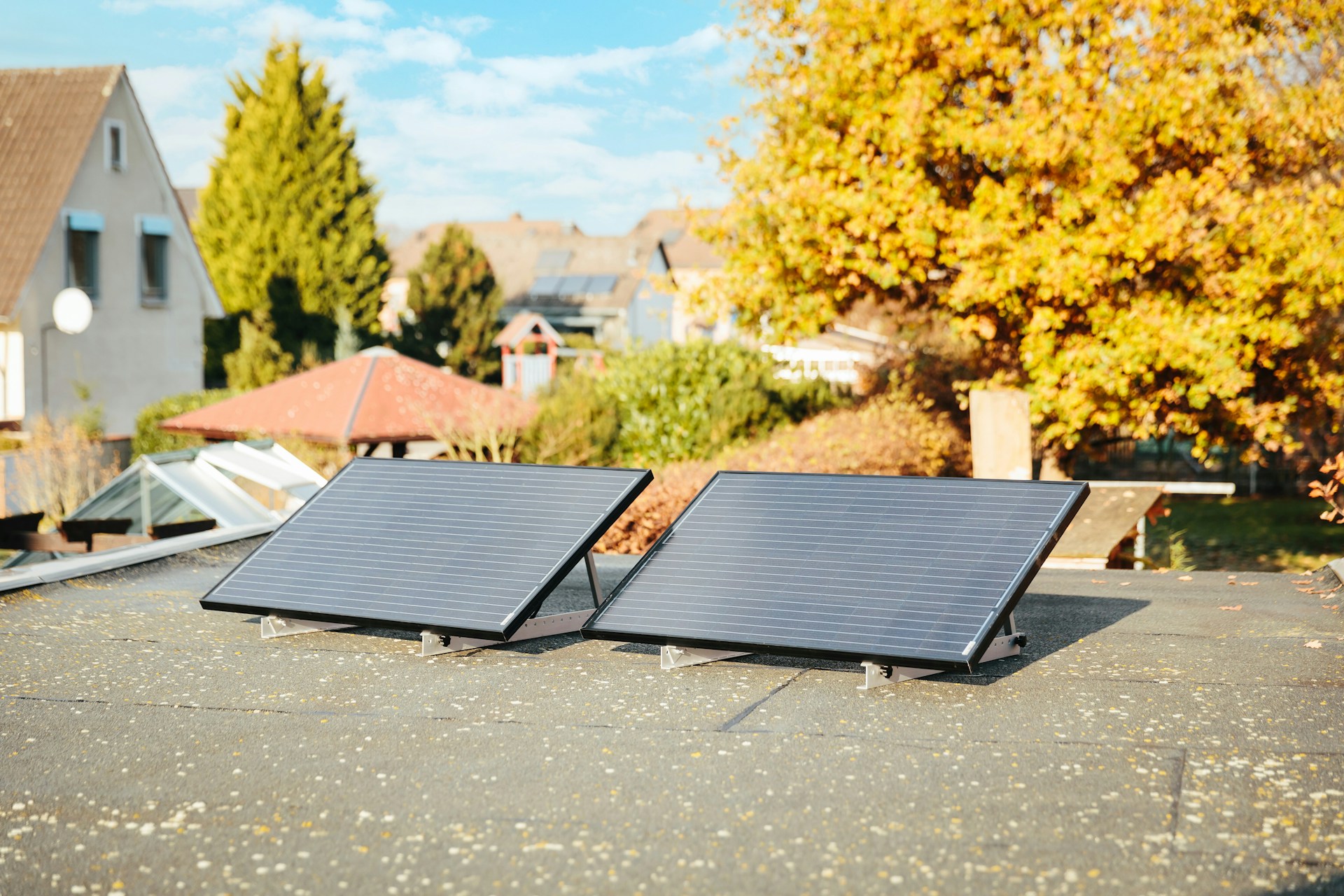
Key Stat: An estimated 250,000 U.S. homes are fully off-grid, and another 1.5 million solar-plus-storage homes now have the ability to island from the grid during outages — a number growing by hundreds of thousands annually.
— EIA / Wood Mackenzie, 2025
Off-Grid Households
~250,000
Estimated U.S. households living fully off-grid (no utility connection) — primarily powered by solar, wind, and/or generator
— EIA Residential Energy Consumption Survey, 2024
20%
Growth rate in new fully off-grid home constructions in rural areas from 2022 to 2024
— NREL Off-Grid Energy Research, 2025
$25,000–$70,000
Typical total cost to build a complete off-grid solar + battery + backup system for a 1,500–2,500 sq ft home
— NREL, 2025
Alaska
State with the highest proportion of off-grid homes — remote communities without grid access have used solar and diesel for decades
— EIA, 2024
1M+
Global homes in developed countries (U.S., EU, Australia) that have achieved near-full energy self-sufficiency through solar + storage — tracking toward 5M by 2030
— BloombergNEF New Energy Outlook, 2025
$0.40+/kWh
Electricity rate threshold at which going fully off-grid becomes economically viable in most U.S. markets — Hawaii already exceeds this
— NREL, 2025
Solar + Storage Self-Sufficiency
1.5M+
U.S. solar-plus-storage homes with islanding capability — able to operate independently from the grid during outages
— Wood Mackenzie, 2025
70–90%
Typical annual electricity self-sufficiency rate for a properly sized solar + battery system in a sunny U.S. climate
— NREL Solar + Storage Self-Consumption Study, 2024
30–40%
Self-sufficiency rate for a solar-only system (no battery) — limited by nighttime and cloudy-day grid dependence
— NREL, 2024
3–5 days
Average duration a well-designed home solar + storage system can maintain essential loads without grid power in summer
— NREL, 2024
27 kWh
Minimum battery storage capacity (combined) needed for a typical U.S. home to maintain 24/7 essential-load operation during a winter power outage
— NREL Home Energy Storage Sizing Guide, 2024
15 kW
Minimum solar array size for a full home offset in most U.S. climates when paired with 27+ kWh of battery storage
— NREL, 2024
Energy Costs & Rate Trends
$0.138/kWh
Average U.S. residential electricity rate in 2024 — up 28% from $0.108/kWh in 2019
— EIA Electric Power Monthly, 2025
$0.39/kWh
Average residential electricity rate in Hawaii — the highest in the nation, making energy independence highly economical
— EIA, 2025
4.5%/yr
Average annual increase in U.S. residential electricity rates over the past decade
— EIA, 2025
$0.20+/kWh
Electricity rates in 14 U.S. states — significantly above the national average and accelerating solar + storage adoption
— EIA, 2025
Virtual Power Plants
50,000+
Homes enrolled in U.S. virtual power plant (VPP) programs — where home batteries are aggregated to support the grid during peak demand
— Wood Mackenzie, 2025
$200–$400/yr
Typical annual compensation for homeowners who enroll their battery in a VPP program
— NREL VPP Pilot Analysis, 2024
500 MW
Combined capacity of U.S. residential VPP programs in 2024 — equivalent to a mid-size power plant
— Wood Mackenzie, 2025
5 GW
Projected U.S. residential VPP capacity by 2030 — a 10x growth in 6 years
— BloombergNEF, 2025
Consumer Motivations
78%
Share of solar + storage buyers citing grid outage protection as a primary purchase motivation
— Lawrence Berkeley National Laboratory, 2025
62%
Share citing rising electricity bills as a top motivation for energy independence investments
— Lawrence Berkeley National Laboratory, 2025
45%
Share citing environmental motivation (reducing carbon footprint, energy independence from fossil fuels)
— Lawrence Berkeley National Laboratory, 2025
38%
Share who experienced a power outage of 3+ days in the prior 3 years — the strongest single predictor of solar + storage purchase
— IBHS, 2024
Key Technologies
Islanding
Critical feature of energy-independent systems: the ability to automatically disconnect from the grid and operate self-contained on solar + battery power
— NREL, 2024
Bidirectional EV
Vehicle-to-home (V2H) capable EVs — including Ford F-150 Lightning and Nissan Leaf — can provide 9–15 kWh of backup power per charge session
— NREL EV Grid Integration, 2024
Microgrids
Community-scale microgrids serving 10–500 homes are growing — 300+ active residential microgrid projects in the U.S. as of 2024
— Wood Mackenzie, 2025
Smart panels
AI-managed smart electrical panels (Span, Lumin, Leviton) enabling automated load management and self-sufficiency optimization — 100,000+ installed in U.S.
— Wood Mackenzie, 2025
Market Outlook
5M
U.S. homes projected to have islanding-capable solar + storage systems by 2030 — up from 1.5M today
— BloombergNEF, 2025
$600/kWh
Projected residential battery storage installed cost by 2030, making energy independence economically viable in more markets
— BloombergNEF, 2025
20%
Share of U.S. homes projected to achieve 80%+ annual energy self-sufficiency by 2035
— NREL Solar Futures Study, 2025
$0.15/kWh
Projected fully-loaded cost of solar-generated residential electricity by 2030 in most U.S. markets — below average utility rates even before storage
— BloombergNEF, 2025
Frequently Asked Questions
How many homes in the U.S. are completely off-grid?
Approximately 250,000 U.S. households live fully off-grid with no utility connection, according to EIA Residential Energy Consumption Survey data. These are most common in rural Alaska, the Mountain West, and areas where grid connection costs are prohibitively high. Another 1.5 million grid-connected homes have solar + battery systems with islanding capability — meaning they can operate independently during outages even while staying connected to the grid the rest of the time.
What percentage of electricity can solar panels cover for a home?
A properly sized solar system can offset 90–100% of a home's annual electricity consumption in most U.S. climates. Without battery storage, homeowners typically achieve 30–40% self-sufficiency (because they export excess daytime solar and draw from the grid at night). With battery storage, self-sufficiency rates climb to 70–90%+ annually, depending on system size, local sun hours, and consumption patterns.
Can a home run completely on solar and battery power?
Yes, but it requires careful system sizing. NREL research suggests a minimum of 15 kW of solar and 27+ kWh of battery storage for a typical U.S. home to maintain essential loads through a winter outage. In practice, most full off-grid systems include a propane or natural gas backup generator for extended cloudy periods. Total system costs range from $25,000–$70,000 depending on home size and location.
Why are electricity rates making energy independence more attractive?
U.S. residential electricity rates have risen an average of 4.5% per year over the past decade, from $0.108/kWh in 2019 to $0.138/kWh in 2024 — a 28% increase. In 14 states, rates exceed $0.20/kWh. As solar costs have fallen 64% simultaneously, the payback period for solar + storage systems has shrunk dramatically, making energy self-sufficiency economically rational in an ever-larger share of U.S. markets.
What is a virtual power plant and how does it affect energy independence?
A virtual power plant (VPP) aggregates the batteries of thousands of energy-independent homes into a coordinated resource that utilities can call on during peak demand. Homeowners in VPP programs earn $200–$400 per year by allowing the utility to briefly draw from or charge their batteries, while maintaining their personal backup power capability. Over 50,000 U.S. homes are enrolled in VPP programs today, with total enrolled capacity reaching 500 MW — equivalent to a mid-size power plant.
Cite This Page
EmergencyEnergy.co. "Energy Independence Statistics 2026: Off-Grid Homes, Storage & Self-Sufficiency."
Updated April 2026. https://emergencyenergy.co/stats/energy-independence-statistics-2026.html