
Solar generators — really just large lithium battery packs with built-in inverters — have matured dramatically. The 2026 models from EcoFlow, Jackery, and Bluetti are genuinely capable of running essential home circuits for short-to-medium outages without fuel, noise, carbon monoxide risk, or permits. For Ontario homeowners who want outage coverage without the complexity of a generator, they're now a legitimate option.
The key limitation: solar generators can't match a conventional generator's raw wattage for the same price. A $1,500 solar generator gives you ~2,000Wh of stored energy. A $900 conventional generator will run indefinitely as long as you have fuel. Your choice depends on outage patterns, tolerance for noise, and whether fuel storage is practical for you.
Best Solar Generators for Home Backup (2026)
1. EcoFlow Delta 2 Max — Best Overall Home Backup
The EcoFlow Delta 2 Max is the best balance of capacity, output, and recharge speed. Key specs:
- Capacity: 2,048Wh (expandable to 6,144Wh with extra batteries)
- AC output: 2,400W continuous, 5,000W surge
- Recharge speed: 0–80% in 50 minutes via AC wall outlet
- Solar input: Up to 1,000W, fully charged from solar in ~2 hours with adequate panels
- Battery chemistry: LFP — rated for 3,000 cycles before capacity drops to 80%
- Weight: 23 kg
The LFP chemistry is the key differentiator over older NMC battery units — it's safer (no thermal runaway), operates better in cold temperatures, and lasts significantly longer. For Ontario winters, this matters.
Check current prices on Amazon
2. Jackery Explorer 2000 Plus — Best for Portability
The Jackery Explorer 2000 Plus (2,042Wh) is lighter and more portable than comparable EcoFlow units. It uses LFP chemistry, outputs up to 3,000W, and is expandable to 12kWh with add-on batteries. Jackery's app and interface are simpler — good for users who want straightforward operation. Recharge speed is slower than EcoFlow (1.7 hours via AC), but solar input accepts up to 1,000W. Excellent reliability record across a large install base.
Check current prices on Amazon
3. Bluetti AC200L — Best Value Large Capacity
The Bluetti AC200L (2,048Wh) offers the highest AC output of any unit in its class at 2,400W continuous / 3,600W surge, with dual wireless charging pads, multiple AC outlets, and USB-C PD100W charging. LFP chemistry, expandable to 8,192Wh. Bluetti is typically priced $100–200 less than comparable EcoFlow units for similar specs, making it the value pick for buyers who want maximum capacity per dollar.
Check current prices on Amazon
4. EcoFlow DELTA Pro — Best for Extended Outages
At 3,600Wh base capacity (expandable to 25kWh with Smart Extra Batteries and Smart Generator integration), the DELTA Pro is the most serious home backup solar generator available. It supports 3,600W output, has whole-home EcoFlow Smart Panel integration for automatic transfer switching, and can be paired with compatible EVs for vehicle-to-home power. At ~$3,000 CAD base, it's a significant investment — but for Ontario homeowners in high-outage areas who want a fuel-free solution, it's the credible alternative to a standby generator.
Solar Generator vs Conventional Generator: The Real Comparison
| Factor | Solar Generator (2,000Wh) | Conventional Generator (5,500W) |
|---|---|---|
| Initial cost | $1,200–$1,800 CAD | $700–$1,000 CAD |
| Ongoing fuel cost | $0 (solar) or minimal (AC recharge) | $50–$100/day at full load |
| Runtime per "tank" | 2–20 hours depending on load | Unlimited with fuel supply |
| Noise level | Silent | 65–75 dB |
| Carbon monoxide risk | None | Yes — requires outdoor placement |
| ESA permit required? | No | Yes (if wired to panel) |
| Cold weather performance | LFP chemistry works to -20°C | Excellent if well-maintained |
The Natural Resources Canada energy storage guidelines recommend LFP chemistry for cold-climate residential installations due to its superior low-temperature discharge performance compared to NMC lithium batteries.
How Much Solar Do You Need to Recharge?
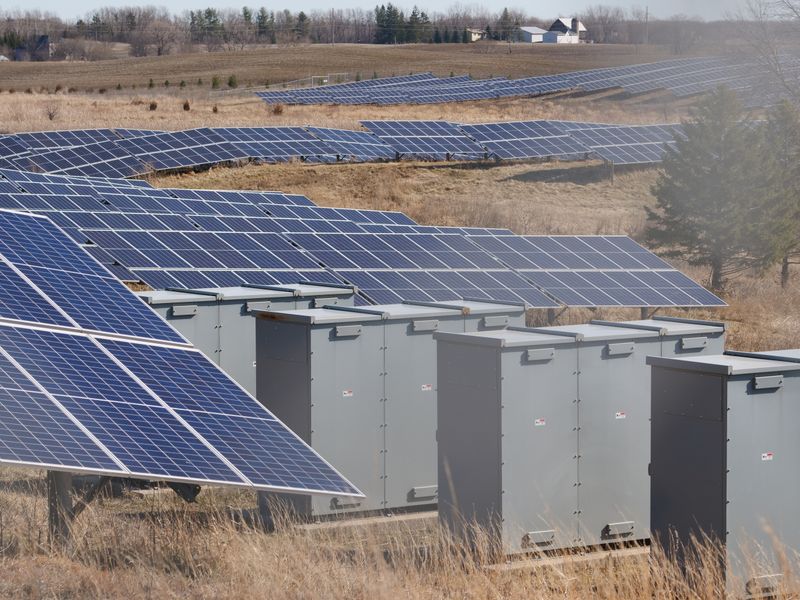
A 2,000Wh solar generator needs roughly 4–8 hours to fully recharge from solar panels in Ontario summer conditions (assuming 400–500W of panel capacity). In April–October, solar recharge is practical. In January–February with shorter days and snow-covered panels, plan to recharge via AC wall outlet as primary and solar as supplemental.
For practical Ontario outage backup:
- Keep the unit charged via AC wall outlet between outages
- Deploy solar panels during outages to extend runtime
- A 2-panel (400W total) portable solar setup costs $400–600 CAD and fits most backyards
For information on integrating solar generators with a broader home energy plan, see our complete Ontario home backup power guide, and our comparison of whole-house battery backup systems for larger-scale installations.
The Ontario government's Emergency Preparedness guidelines recommend having at least 72 hours of backup power for critical needs — a 2,000Wh solar generator comfortably covers that for essential devices like a fridge, CPAP, and phone charging.
Frequently Asked Questions
Related Resources
- Emergency preparedness guides and survival tips Power is one piece — see the full preparedness picture.
What is the best solar generator for home backup power?
The EcoFlow Delta 2 Max (2,048Wh) is the best solar generator for home backup in 2026. It charges from 0–80% in under 1 hour via AC, supports up to 2,400W of output, has LFP chemistry rated for 3,000+ cycles, and can power a fridge for 24+ hours on a full charge. For whole-home essential circuits over multi-day outages, the EcoFlow DELTA Pro at 3,600Wh is the better choice.
Can a solar generator run a furnace?
A gas furnace blower motor draws 400–800W running and up to 2,400W on startup. A 2,000Wh solar generator like the EcoFlow Delta 2 Max can power a furnace blower for 2–4 hours continuously. For multi-day winter outages, you'd need multiple panels for daytime recharge or a larger unit like the EcoFlow DELTA Pro with its 25kWh expandable capacity.
How long does a solar generator last on one charge?
Runtime depends entirely on what you're running. A 2,000Wh generator will power: a fridge for 24+ hours, a CPAP for 30+ hours, a laptop for 20+ charges, or 200 phone charges. Running multiple high-draw appliances simultaneously reduces runtime proportionally. Most users running a fridge plus lights plus phone charging can expect 12–20 hours from a 2,000Wh unit.
Is Jackery or EcoFlow better?
EcoFlow generally offers faster charging, higher output wattage, and expandable capacity — better for home backup. Jackery is simpler to use, lighter per watt-hour, and has longer-established reliability data — better for camping and portability. For Ontario home outage backup, EcoFlow's faster AC recharge speed is a significant practical advantage.
Get weekly guides from EmergencyEnergy
No spam. Unsubscribe anytime.